

Open kitchen shelves can instantly make a space feel lighter, warmer, and more personal—but only when they’re styled with intention. Too many items, mismatched colors, or cluttered stacks can quickly turn “effortless” into overwhelming. The good news? You don’t need to be a designer to get it right. With a few thoughtful choices, open shelving can look calm, curated, and completely livable.
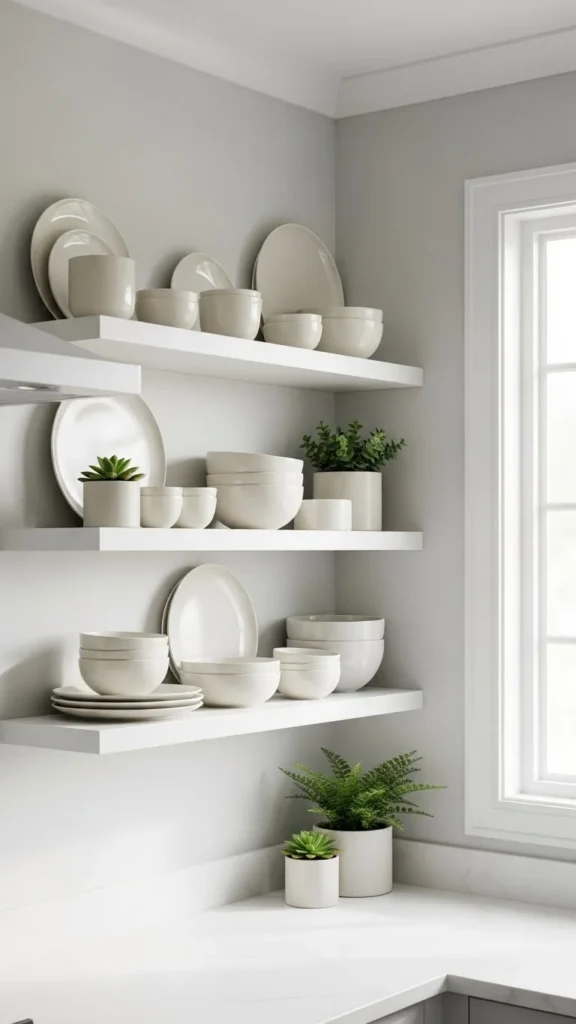
Start With a Clear Purpose for Each Shelf
Before placing anything, take a moment to decide what each shelf is meant to do. Is it mostly decorative, mostly functional, or a balance of both?
Clear purpose helps prevent overcrowding because it limits random additions.
- Top shelves work best for decor, rarely used pieces, or collections
- Middle shelves are ideal for everyday dishes and glassware
- Lower shelves should hold the items you reach for most often
Once each shelf has a role, it becomes much easier to say no to items that don’t belong.
Edit Ruthlessly Before You Style
Open shelves don’t forgive clutter. This is where editing matters more than styling.
Lay everything out on the counter and ask:
- Do I use this regularly?
- Does it fit my color palette?
- Does it add visual calm or visual noise?
Aim to keep about 50–60% of shelf space open. That breathing room is what makes shelves feel intentional instead of packed.
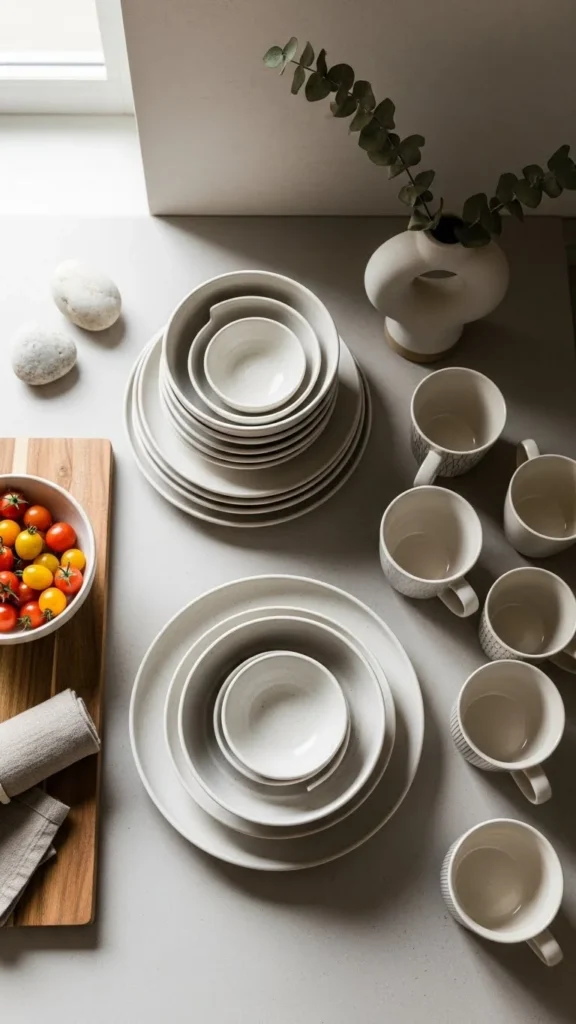
Stick to a Simple, Cohesive Color Palette
A tight color palette is one of the easiest ways to avoid visual overload. When everything works together, you can display more without it feeling busy.
Great shelf-friendly palettes include:
- Whites, creams, and warm neutrals
- Soft gray with natural wood tones
- Earthy colors like clay, sage, and sand
If you love color, use it sparingly—think one accent color repeated a few times rather than many competing shades.
Use Repetition to Create Calm
Repetition is a designer’s secret weapon. When shapes, materials, or colors repeat, the eye relaxes.
Ways to build repetition:
- Stack matching plates or bowls
- Line up similar jars or containers
- Use the same material (ceramic, wood, glass) across shelves
Instead of one of everything, try groups of the same thing. Three similar bowls look calmer than three totally different ones.
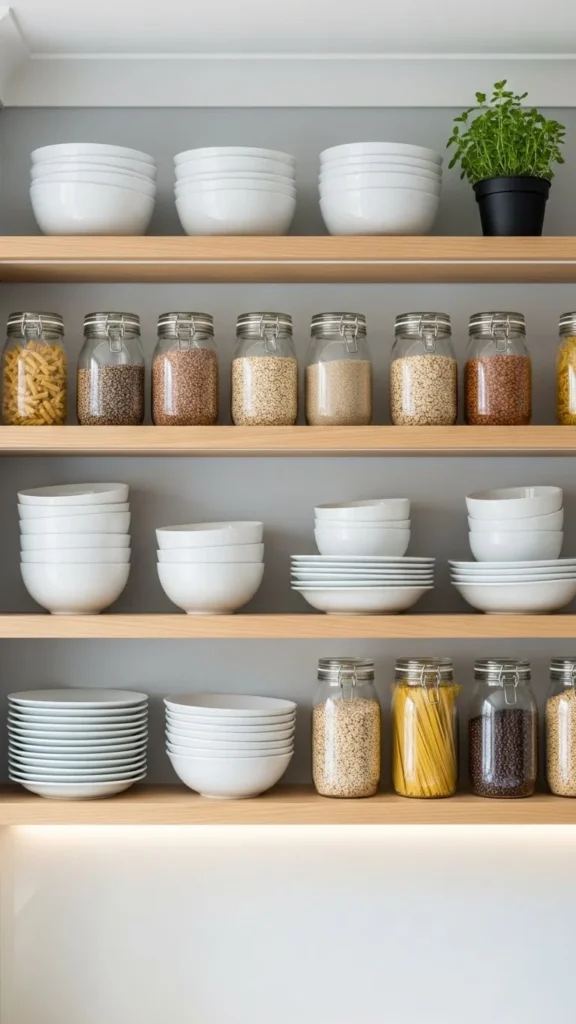
Balance Function With Decorative Breaks
A shelf filled entirely with dishes can feel heavy. Decorative breaks add lightness and keep the display from looking like storage.
Easy decorative fillers:
- Small plants or herbs in simple pots
- Wooden cutting boards leaned against the wall
- A single framed print or art tile
- A neutral vase or sculptural object
The key is spacing. Leave room around decorative pieces so they stand out rather than compete.
Vary Heights and Depths (But Keep It Subtle)
Uniform height can look flat, while too much variation feels chaotic. The sweet spot is gentle contrast.
Try:
- Tall items at the ends, shorter items in the center
- One vertical piece paired with horizontal stacks
- Leaning boards behind shorter objects for depth
Keep height changes intentional and limited to avoid visual clutter.
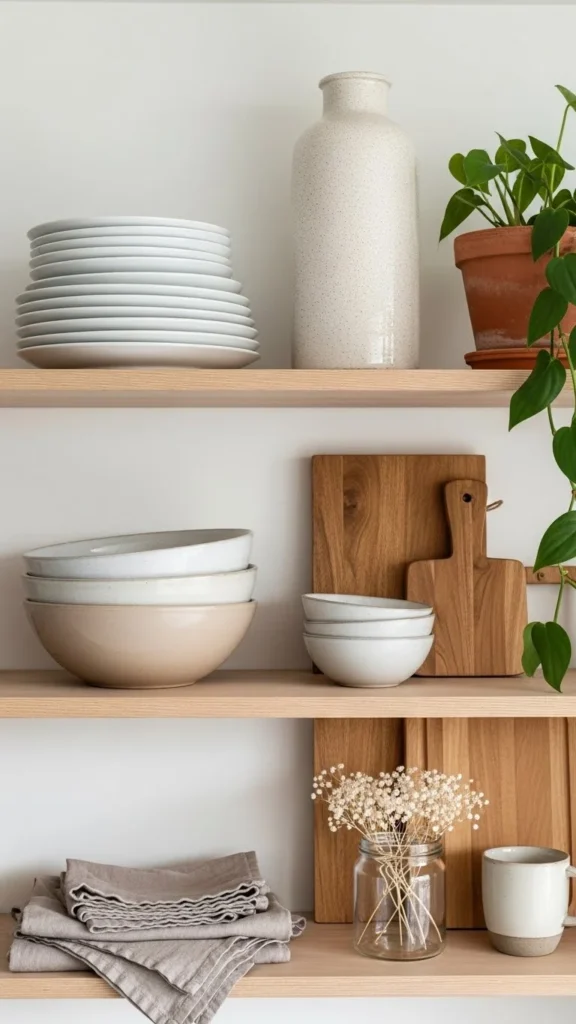
Leave Space for Real Life
The most beautiful open shelves still need to work for everyday use. Leave a little empty space so shelves don’t feel fragile or overstyled.
This also gives you:
- Room to add seasonal touches later
- Flexibility when you buy new dishes
- Less pressure to keep everything perfect
Think of open shelves as a living display—not a showroom.
Do a Final Step-Back Test
Once everything is placed, step back and look at the shelves as a whole.
Ask yourself:
- Does anything feel crowded?
- Is there a clear flow from shelf to shelf?
- Do my eyes have places to rest?
If something feels off, remove one item before adding another. Editing almost always improves the look.
Final Takeaway
Decorating open kitchen shelves without overcrowding is all about restraint, repetition, and breathing room. Choose fewer items, repeat what works, and let empty space do some of the heavy lifting. When styled with intention, open shelves can feel warm, practical, and beautifully balanced.
Save this guide for later and revisit it next time your shelves start feeling a little too full!
Leave a Reply