

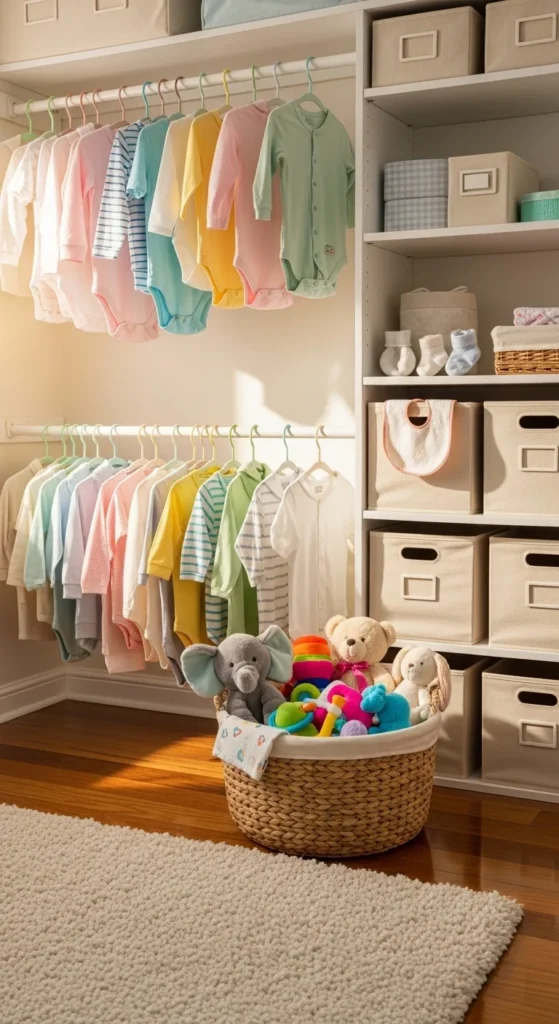
Organizing a baby’s closet can feel overwhelming, but it doesn’t have to be. With the right approach, you can transform a crowded space into a stress-free, functional, and adorable closet. The goal is simple: make everything accessible, visible, and easy to maintain. From foldable storage bins to DIY hanging organizers, small changes can make a big difference. These ideas are practical, affordable, and perfect for keeping your little one’s clothes, toys, and essentials in order without spending a fortune.
1. Use Color-Coded Bins
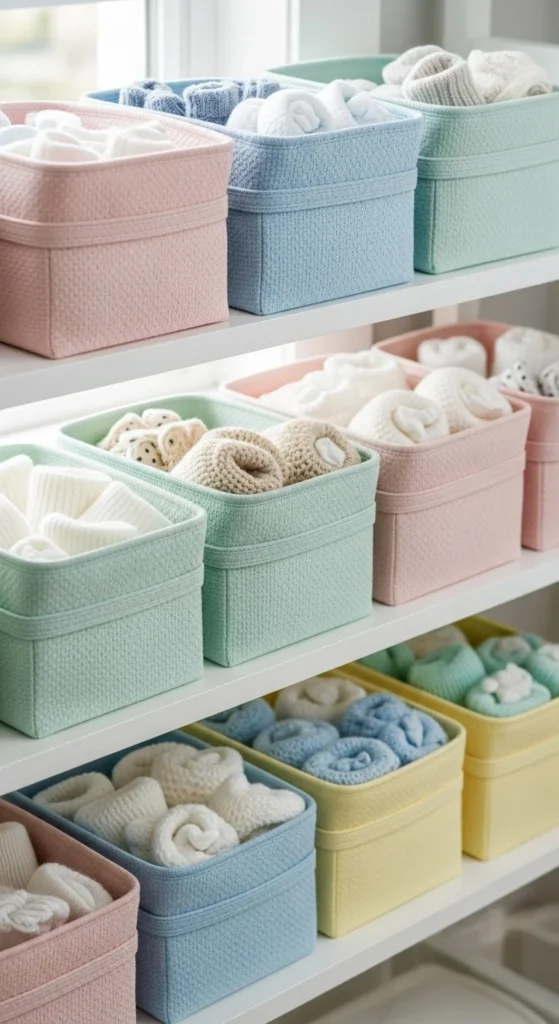
Color-coding bins is a quick way to keep your baby’s closet tidy. Assign different colors for different items—one for socks, one for bibs, another for pajamas. This makes finding items faster, especially during busy mornings. You can buy inexpensive plastic bins or DIY with cardboard and wrapping paper. Label each bin with a simple sticker or tape. Not only does it look cheerful, but it also teaches older toddlers to recognize colors and help clean up. Stackable bins save space vertically and keep floors clutter-free.
2. Install Low Hangers
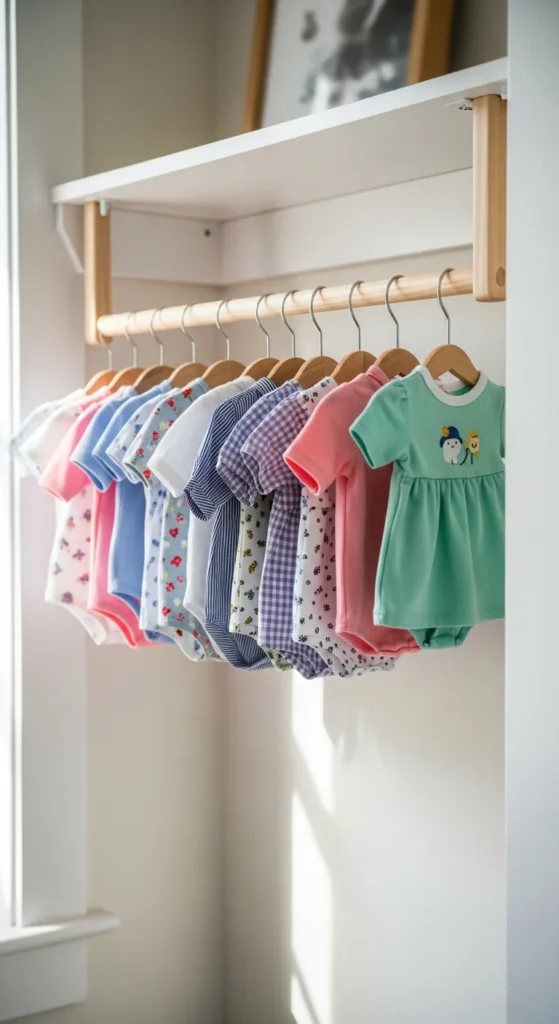
Low hangers make it easy for parents and kids to access clothes. Use tiny hangers for baby outfits and hang them at a height that’s reachable. This method encourages independence as toddlers grow. You can find affordable wooden or plastic hangers in bulk. Keep similar items together—onesies on one rod, dresses on another. Using uniform hangers gives the closet a clean, cohesive look and prevents clothes from slipping off.
3. Fold Onesies Vertically
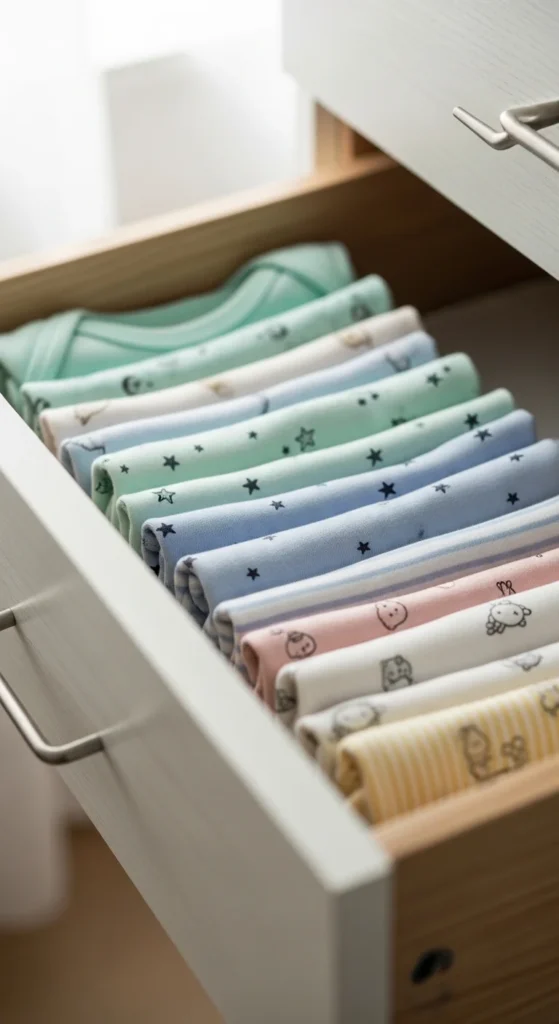
Folding onesies vertically saves drawer space and makes finding the right outfit easier. Lay the onesie flat, fold sides inward, then fold from bottom to top. Store them standing up in a drawer or basket. This method keeps every item visible, so you won’t have to dig through piles. Add small drawer dividers for extra organization. You can DIY dividers with cardboard or repurpose shoeboxes. Vertical folding is a simple trick that reduces clutter instantly.
4. Label Everything
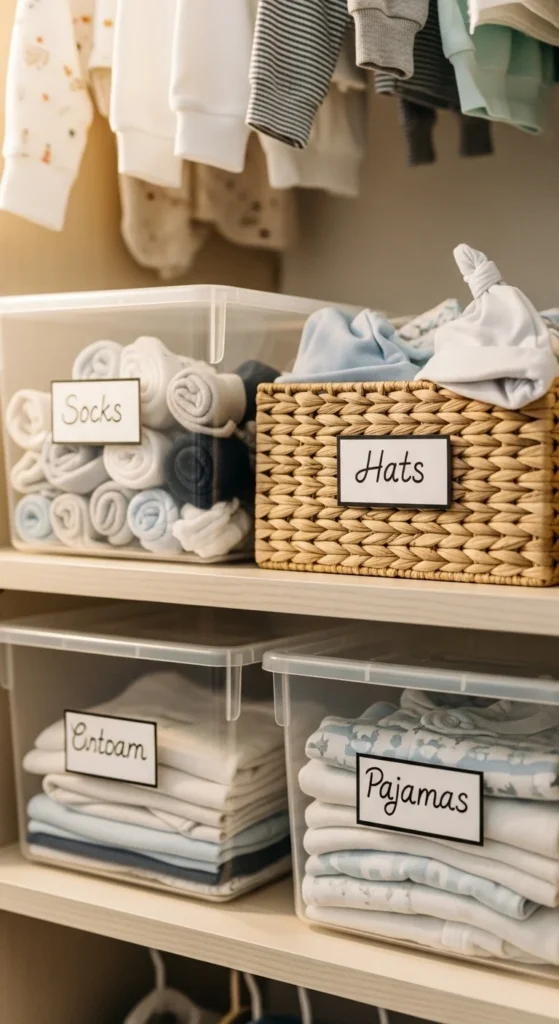
Labels are a lifesaver for busy parents. Use simple, clear labels for every bin, drawer, and basket. You can handwrite them, print them at home, or use pre-made sticker labels. Labels not only help you find items quickly but also make it easier for babysitters or grandparents to navigate the closet. Stick to large, readable fonts or bright colors for easy identification. For added fun, include tiny icons like a sock or bottle. Labeling keeps the closet functional and playful.
5. Utilize Hanging Organizers
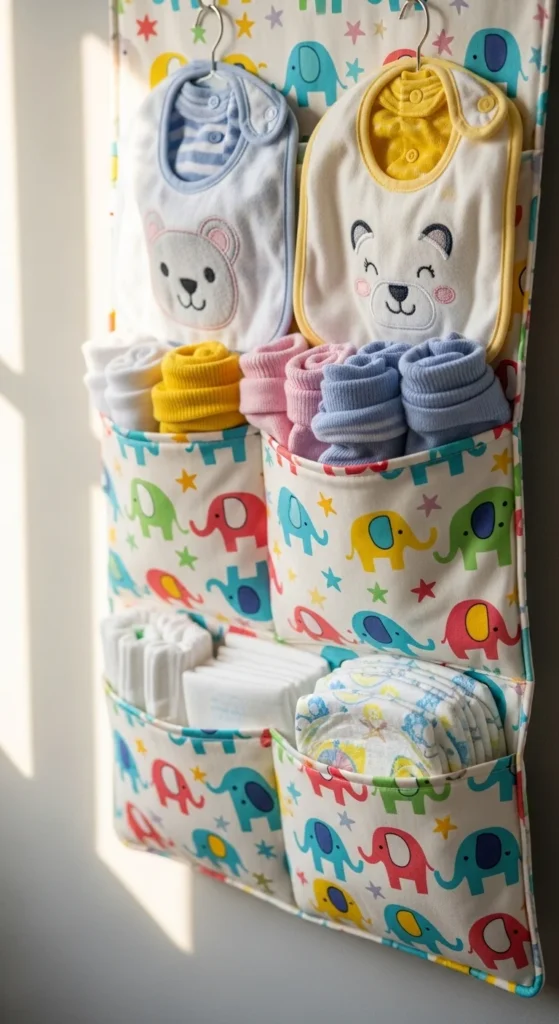
Hanging organizers are perfect for maximizing vertical space. Use pocketed organizers on the inside of the closet door or on a rod. Store small items like socks, diapers, or burp cloths in each pocket. They are budget-friendly and easy to install—no tools required. Clear or mesh organizers let you see contents quickly. This approach keeps small items contained and prevents them from being lost in drawers.
6. Rotate Seasonal Clothes
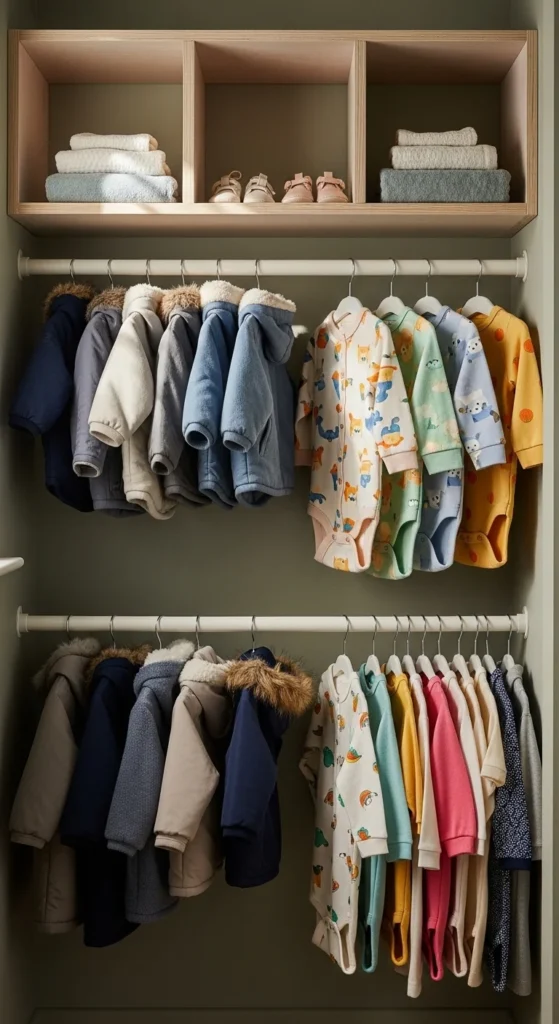
Rotating seasonal clothes frees up space. Store off-season items in bins or under-bed containers. This keeps the closet uncluttered and makes it easier to locate the clothes your baby is currently wearing. Use vacuum bags or large plastic bins for bulkier items like snowsuits. Rotating clothes also ensures that outfits are ready when needed, preventing last-minute digging through stacks of clothing.
7. Use Clear Storage Bins
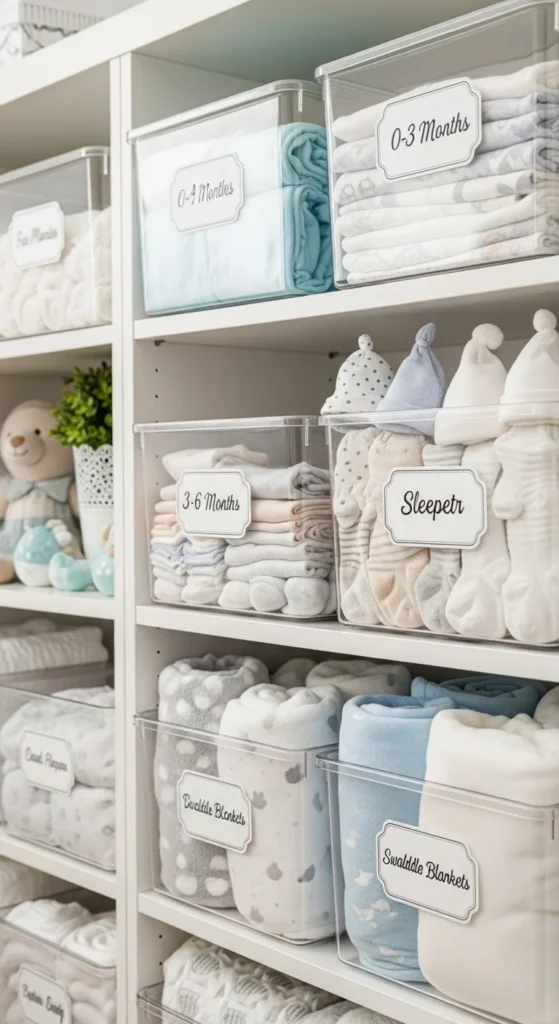
Clear bins make everything visible at a glance. You don’t need to open each box to see what’s inside. This method works well for blankets, burp cloths, and extra outfits. Label the bins for extra clarity. Affordable options are available at discount stores or online. Stack them to use vertical space efficiently. Clear bins combine functionality with simplicity, making storage stress-free.
8. Add a Toy Basket
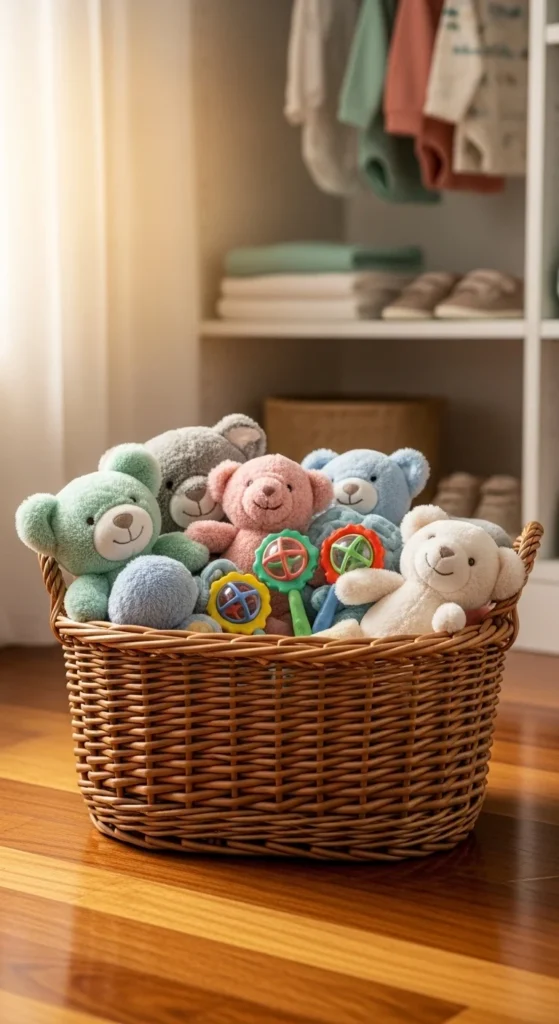
Even a baby closet can get cluttered with toys. A simple toy basket keeps everything in one spot. Choose a large, lightweight basket that’s easy to lift and move. Soft toys are perfect for baskets; keep rattles or teethers separate in smaller bins. Encourage older toddlers to help clean up by placing the basket at their height. This keeps the closet organized and teaches early habits of tidiness.
9. DIY Hanging Rod Dividers
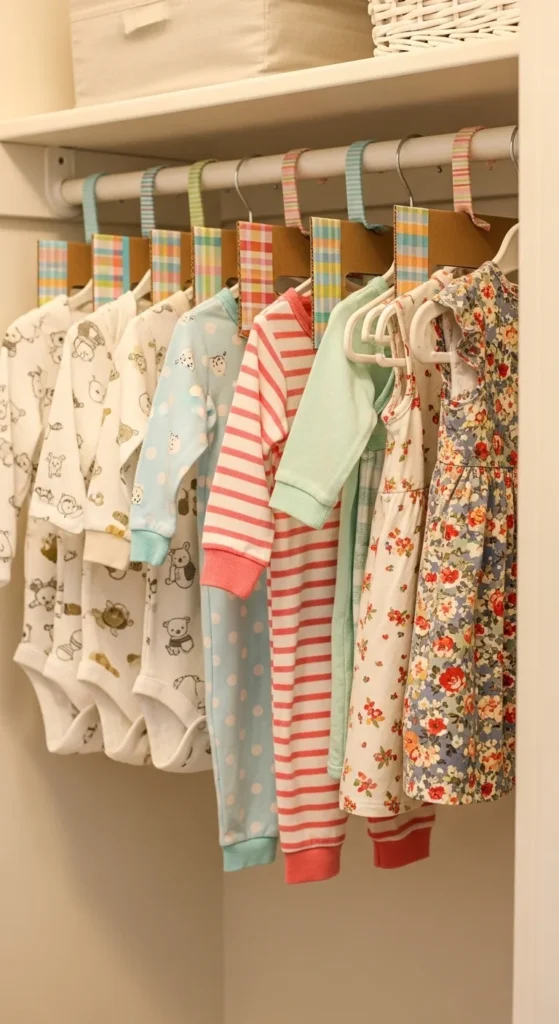
DIY rod dividers help categorize clothes on hangers. Cut cardboard into small rectangles and decorate them with colorful tape. Slide them onto the rod to mark different clothing sections. You can make dividers for sizes, types of clothes, or frequency of use. They’re cheap, customizable, and reusable. This simple step keeps your baby’s closet visually organized and easy to navigate.
10. Roll Up Socks and Mittens
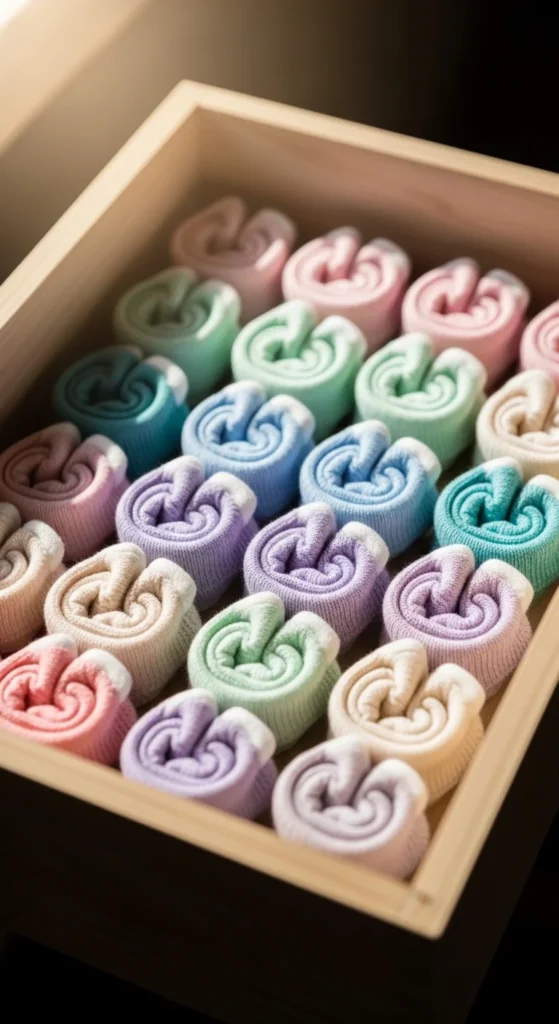
Rolling socks and mittens saves drawer space and keeps pairs together. Lay items flat, fold in half, then roll tightly. Store them vertically in a drawer or small container. You can even color-code by season or outfit type. Rolling prevents items from being lost in cluttered drawers and is a small change that makes a big difference daily.
11. Hang Diaper Caddies
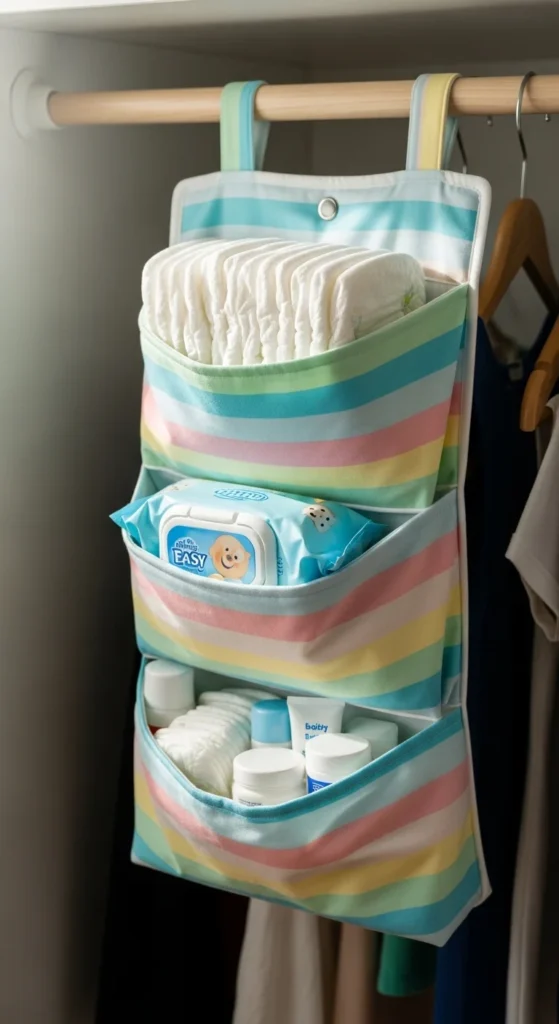
Diaper caddies make diaper changing easy and keep supplies in one spot. Hang a small caddy on a closet rod or door. Use pockets for diapers, wipes, creams, and extra outfits. This keeps everything accessible without overcrowding shelves. Affordable fabric caddies are widely available, or you can DIY using hanging shoe organizers.
12. Use Shelf Risers
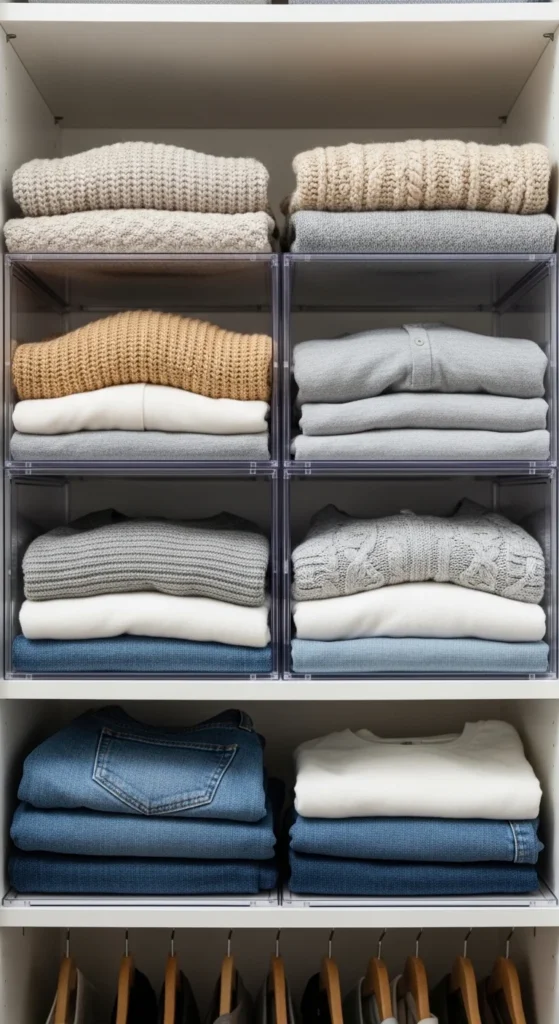
Shelf risers help double storage space. Place risers on shelves to stack folded clothes or blankets without crushing items. They’re inexpensive and easy to move. Use them for pajamas, onesies, or extra bedding. This simple trick allows you to maximize every inch of closet space without cluttering.
13. Install a Small Hook Rack
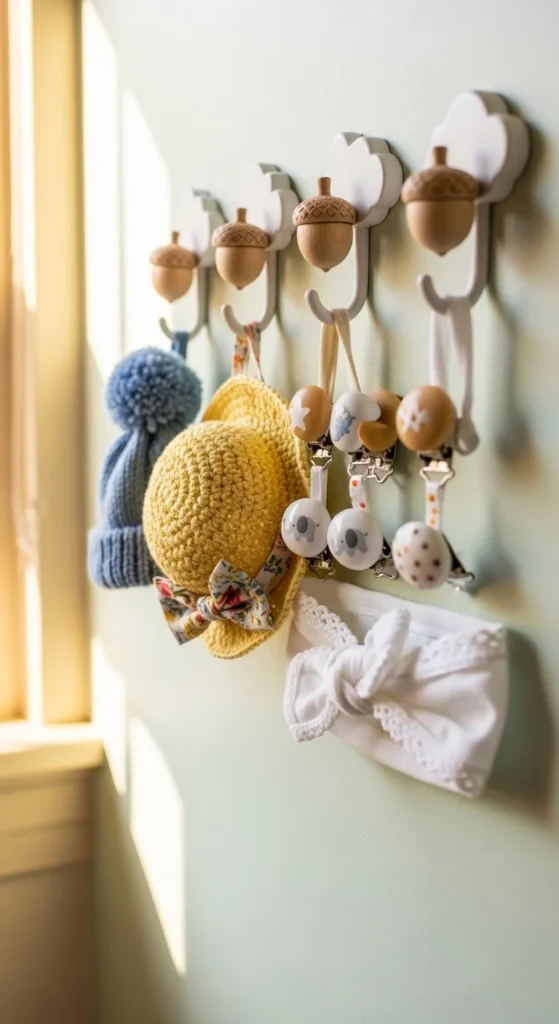
Hooks are great for small items. Install a hook rack inside the closet for hats, headbands, and pacifiers. This keeps small items off shelves or floors and makes them easy to grab. Use colorful or themed hooks for a playful touch. Hooks add storage without taking up shelf space.
14. Keep a Donation Bin
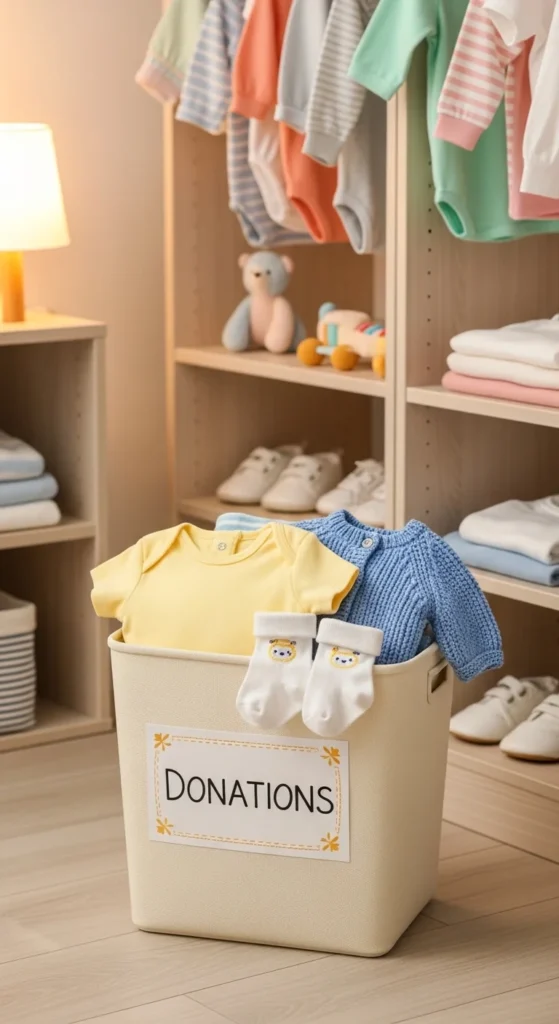
A donation bin keeps your closet clutter-free. Place a small bin or box in the closet for outgrown clothes. Every few weeks, go through the closet and add items no longer needed. This keeps the closet manageable and teaches early habits of giving.
15. Use Drawer Dividers
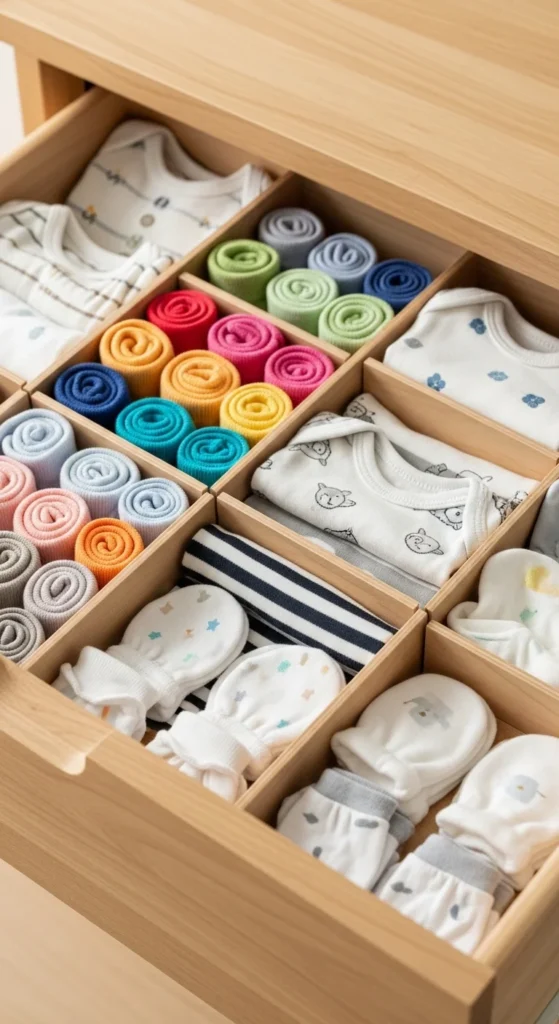
Drawer dividers make small drawers more efficient. They keep tiny items separated and visible, preventing a messy pile. You can DIY with cardboard, old boxes, or inexpensive plastic dividers. Adjustable options allow flexibility as your baby grows. Dividers make daily outfit selection faster and stress-free.
16. Hang a Laundry Bag
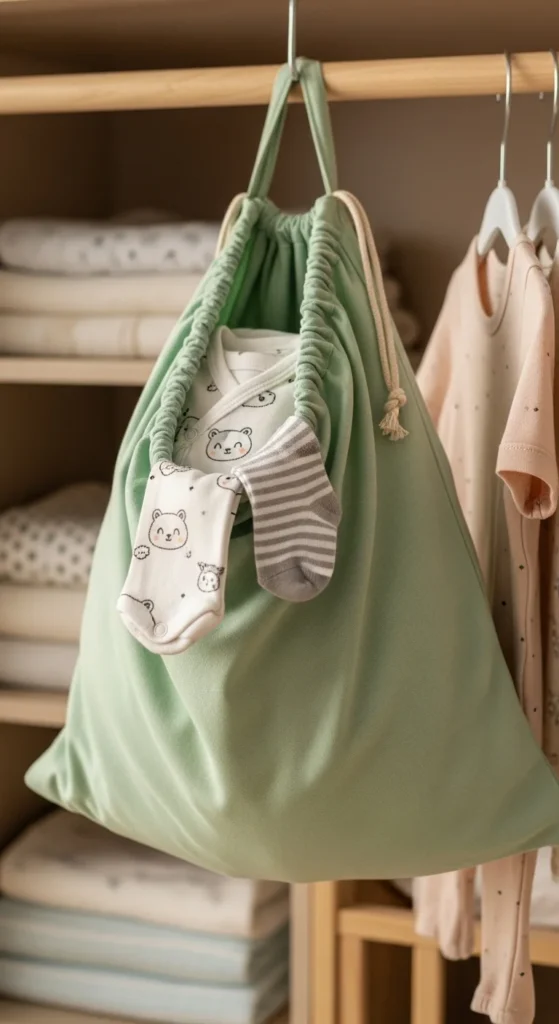
A hanging laundry bag keeps dirty clothes off the floor. Attach it to a rod or hook. This method prevents clothes from piling up on shelves or the floor. Choose a bag with a drawstring or hook closure for easy removal. It’s simple, practical, and keeps the closet neat.
17. Store Shoes in Clear Boxes
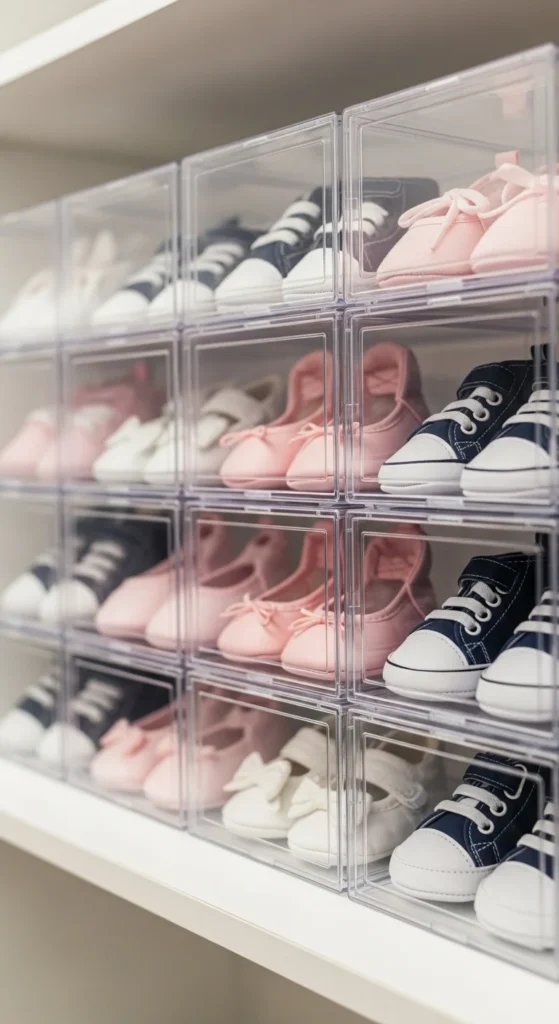
Store baby shoes in clear boxes to keep them organized and visible. This prevents mismatched pairs or lost shoes. You can label boxes with sizes or season. Stack boxes to save space. This simple step keeps footwear easy to find and clutter-free.
18. Use Rotating Baskets for Accessories
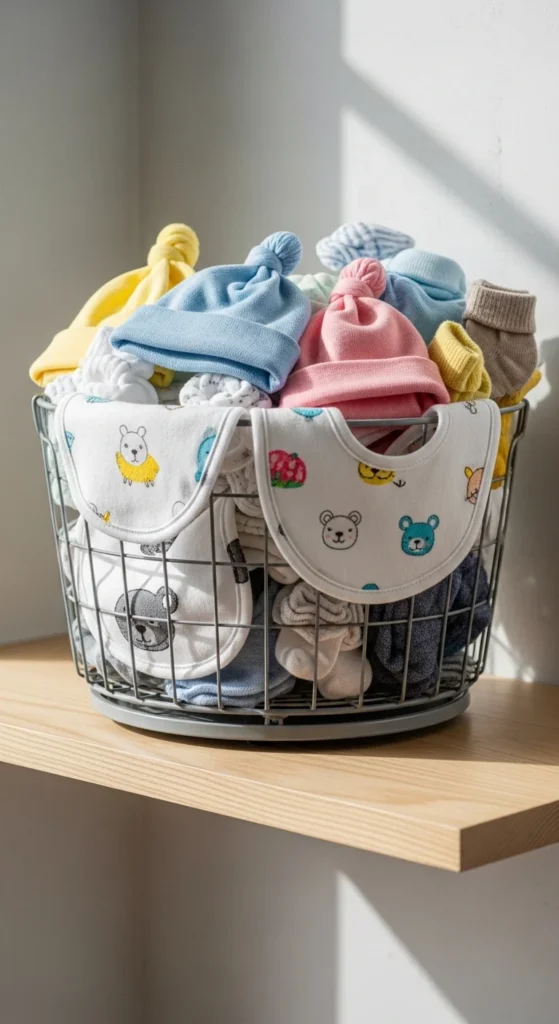
Rotating baskets are perfect for small accessories. Place hats, bibs, and mittens in a spinning basket for easy access. You can repurpose a lazy Susan or small rotating container. This keeps small items contained but easy to grab during busy mornings.
19. Repurpose Shoe Organizers
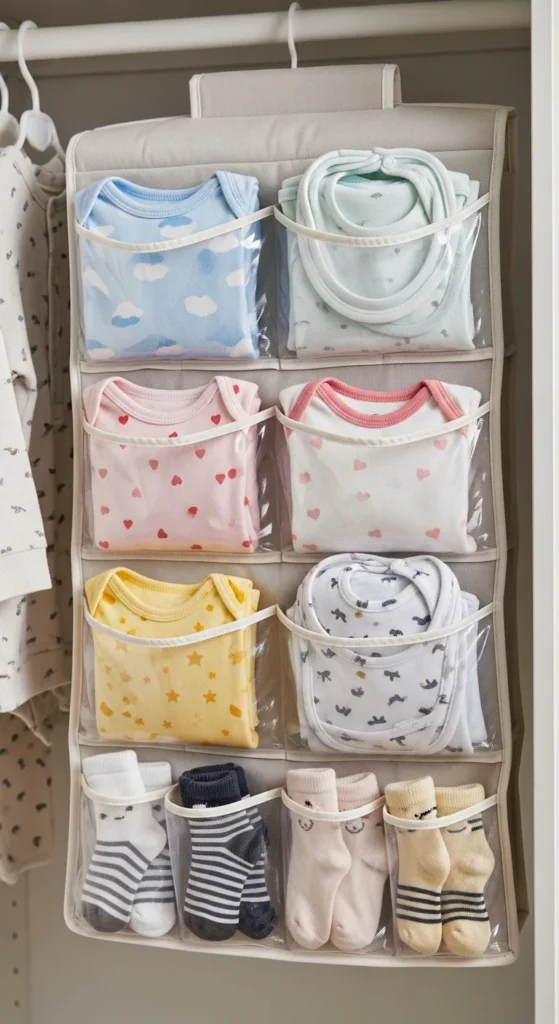
Hanging shoe organizers aren’t just for shoes. Use them for tiny clothes, bibs, or accessories. Each pocket can hold a different item, making it easy to see everything at a glance. They’re affordable, lightweight, and make good use of vertical space.
20. Keep Essentials at Eye Level
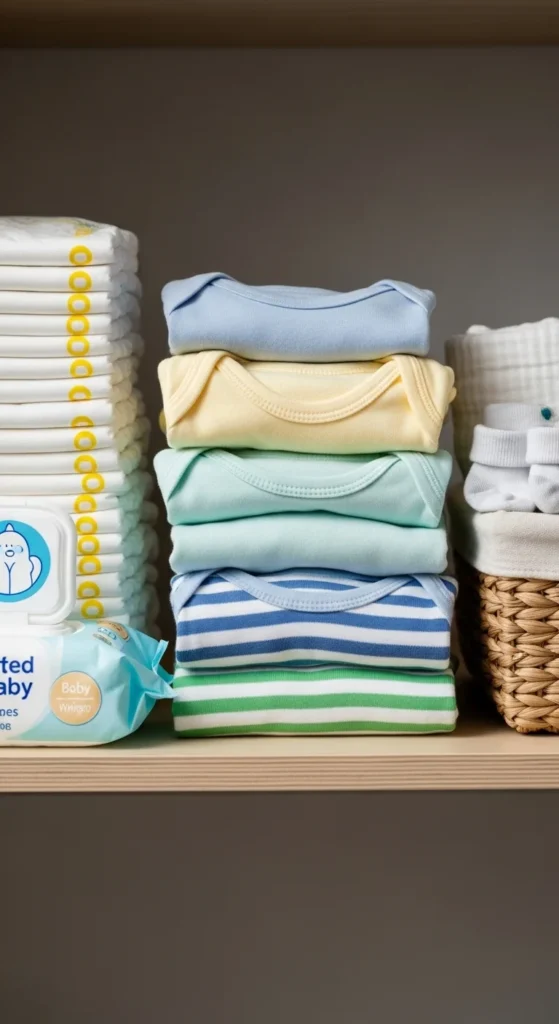
Store the most-used items at eye or waist level. Diapers, wipes, and daily outfits should be easy to reach. Less-used items like seasonal clothes can go higher or lower. This approach minimizes bending or stretching, making daily routines smoother and the closet practical for busy parents.
Conclusion
A well-organized baby closet saves time, reduces stress, and keeps your little one’s items accessible. With these affordable and practical ideas, you can transform even a small space into a tidy, functional, and adorable storage area. By using bins, labels, hooks, and clever DIY solutions, maintaining a clutter-free closet becomes easy and enjoyable. Start with one change today, and watch your baby closet become a calm, efficient, and charming space.
Leave a Reply