

Minimalist kitchens look clean, calm, and timeless—but they can sometimes feel a little too stark. If you love the simplicity of minimalism but want your kitchen to feel warm and welcoming, you’re in the right place. The secret isn’t adding more stuff. It’s choosing the right details that soften the space without breaking the minimalist vibe.
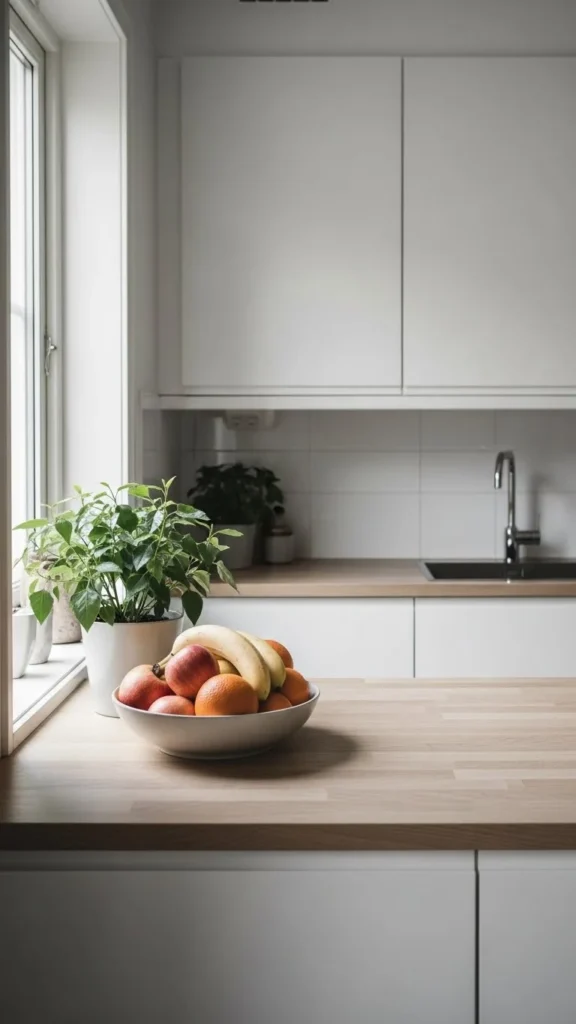
Below, you’ll find practical, easy-to-follow ways to decorate a minimalist kitchen that feels cozy, balanced, and lived-in—without clutter.
Start With Warm Neutrals, Not Pure White
All-white kitchens are classic, but too much bright white can feel chilly. Swapping in warmer neutrals instantly changes the mood.
Think about:
- Creamy whites instead of stark white
- Soft beige, greige, or sand tones
- Pale taupe or warm gray for contrast
Use these shades on walls, backsplashes, or even cabinet finishes. They still feel minimal but add a subtle softness that makes the space more inviting.
If repainting isn’t an option, introduce warmth through small elements like:
- Neutral-toned rugs
- Warm-colored dish towels
- Matte ceramic containers in earthy shades
Use Natural Materials to Add Quiet Texture
Texture is what keeps minimalism from feeling flat. Natural materials work beautifully because they add warmth without visual noise.
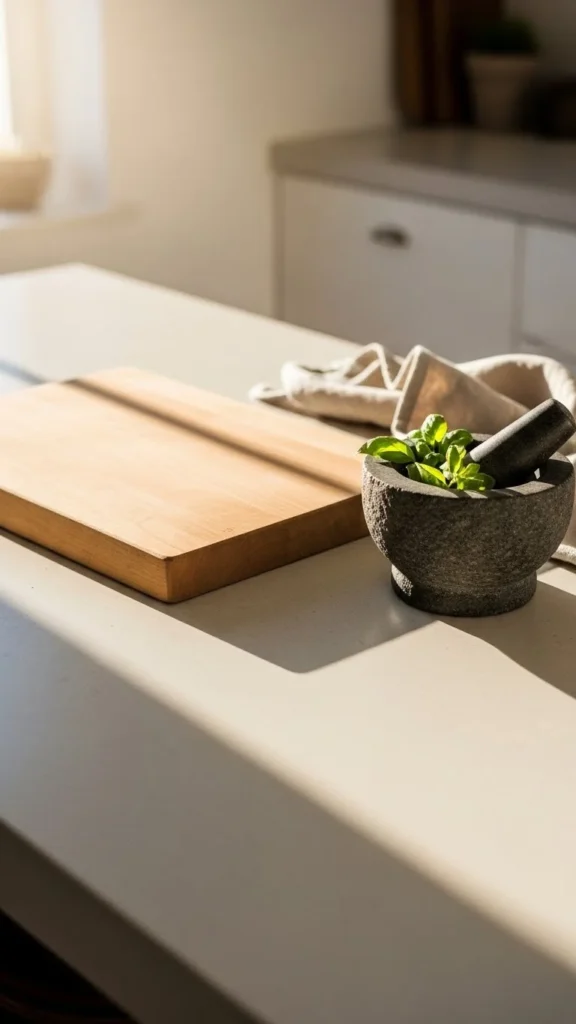
Try incorporating:
- Wood (cutting boards, stools, shelves)
- Stone or marble with subtle veining
- Linen or cotton textiles
- Clay or ceramic accessories
Keep the palette tight—light wood, soft stone, and simple fabrics are enough. A few well-chosen textures will do more than a dozen decorative pieces.
Keep Counters Clear—but Style Them With Purpose
Minimalist kitchens shine when counters stay mostly empty. Still, bare counters can feel sterile. The solution is intentional styling.
Aim for:
- One small grouping per surface
- Items you actually use every day
- Simple shapes and neutral colors
Good counter pairings include:
- A ceramic utensil holder + wooden spoon
- A fruit bowl + folded linen towel
- A tray with soap and a small plant near the sink
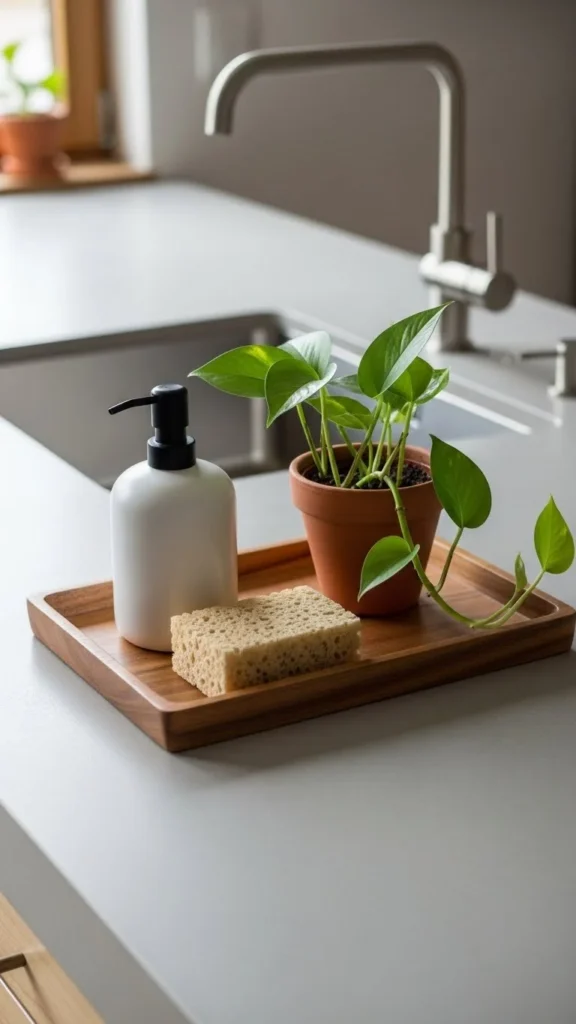
This approach keeps your kitchen practical while adding warmth through everyday objects.
Layer Soft Lighting Instead of Relying on One Source
Lighting can completely change how a minimalist kitchen feels. Bright overhead lighting alone often creates a cold, flat look.
To soften the space, layer your lighting:
- Warm-toned bulbs instead of cool white
- Under-cabinet lighting for a gentle glow
- A simple pendant light above an island or table
Choose fixtures with clean lines but warmer finishes like brushed brass, matte black, or soft metal tones.
In the evening, softer lighting makes the kitchen feel calm and comfortable—perfect for winding down or gathering casually.
Add Life With Simple Greenery
Nothing warms up a minimalist kitchen faster than something alive. Plants bring color, softness, and movement without adding clutter.
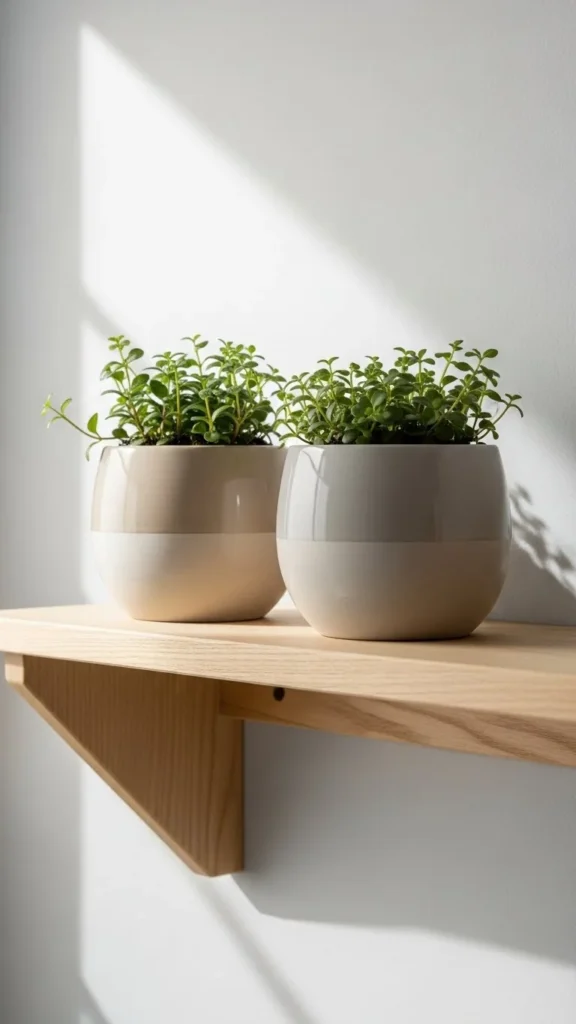
Easy plant ideas:
- Small potted herbs near a window
- A single leafy plant on open shelving
- A low-maintenance plant on the counter or table
Stick to simple pots in white, clay, or stone. One or two plants are enough to make the kitchen feel fresh and welcoming.
Choose Clean Lines—but Soften the Edges
Minimalism often focuses on sharp lines and flat surfaces. To keep things cozy, balance those lines with gentle curves.
Look for:
- Rounded bowls or plates
- Curved bar stools
- Arched faucets or softly shaped handles
These small details subtly soften the space without changing your overall style. It’s a quiet way to add warmth while staying true to minimalist design.
Let Personal Pieces Be the Accent
A minimalist kitchen doesn’t mean it has to feel impersonal. One or two meaningful items can make a big difference.
Consider:
- A handmade ceramic mug on an open shelf
- A framed recipe card or simple art print
- A wooden bowl passed down or found locally
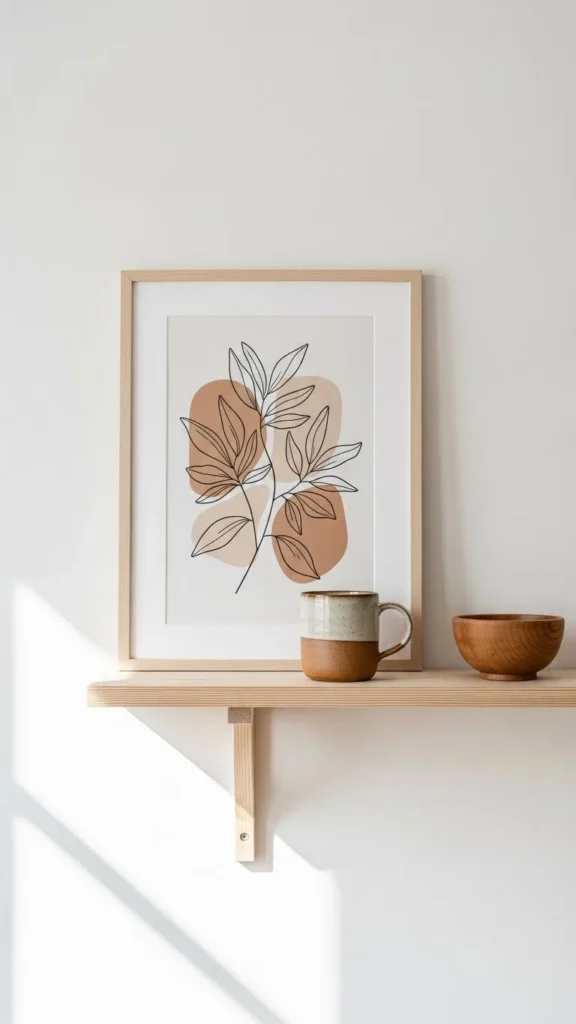
The key is restraint. Choose pieces you love, give them room to breathe, and let them stand out naturally.
Final Takeaway
Decorating a minimalist kitchen without feeling cold is all about balance. Warm neutrals, natural textures, soft lighting, and a few thoughtful details can transform a stark space into one that feels calm and inviting.
You don’t need more décor—you just need better choices.
Save this guide for later and try one tip at a time. Small changes can make your minimalist kitchen feel like the warm heart of your home.
Leave a Reply