

[Image Prompt: A small walk-in closet with white shelves and hanging rods, neatly arranged clothes by color, clear bins stacked on the top shelf, a small shoe rack on the floor, and soft natural light filtering through a nearby window, captured with a high-end DSLR camera.]
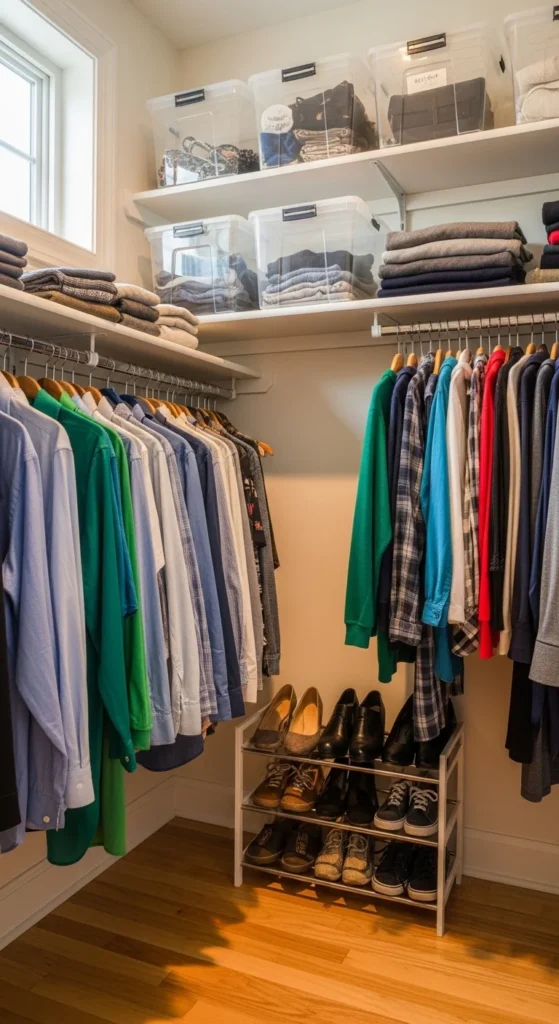
Maximizing a small closet can feel tricky, but with a few clever ideas, your space can feel bigger and stay organized. Smart storage solutions help you keep everything visible, accessible, and tidy. From DIY shelving to simple accessories, these ideas make every inch count. Whether you rent or own, most tips are budget-friendly and easy to implement. Let’s explore 22 practical ways to transform your small closet into a functional, stress-free storage area.
1. Use Slimline Hangers
[Image Prompt: A row of thin, velvet-covered hangers holding colorful shirts in a small closet, the clothes neatly spaced, photographed from an angle showing depth.]
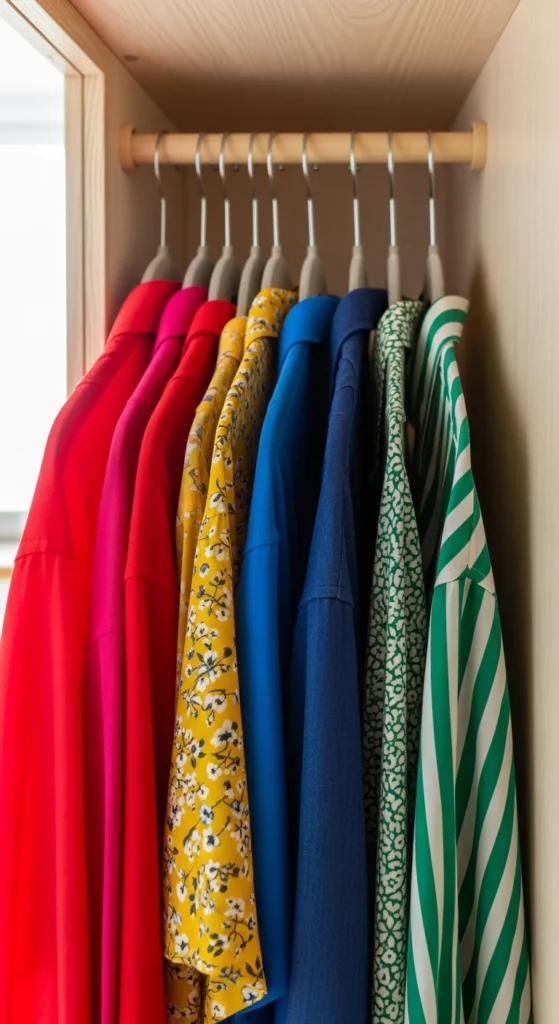
Slimline hangers save space by reducing bulk. Velvet versions prevent clothes from slipping off. Switching from thick plastic hangers can double your hanging capacity. Group shirts, pants, and jackets separately. Keep colors or seasons together for easy access. Many slim hangers are inexpensive and come in packs. For DIY, wrap cardboard with fabric to mimic velvet hangers. This small swap instantly frees up room and makes your closet look neater.
2. Add a Hanging Shelf Organizer
[Image Prompt: A fabric hanging shelf unit in a closet, holding folded sweaters and small baskets, with shoes stored underneath, bright lighting highlighting textures.]
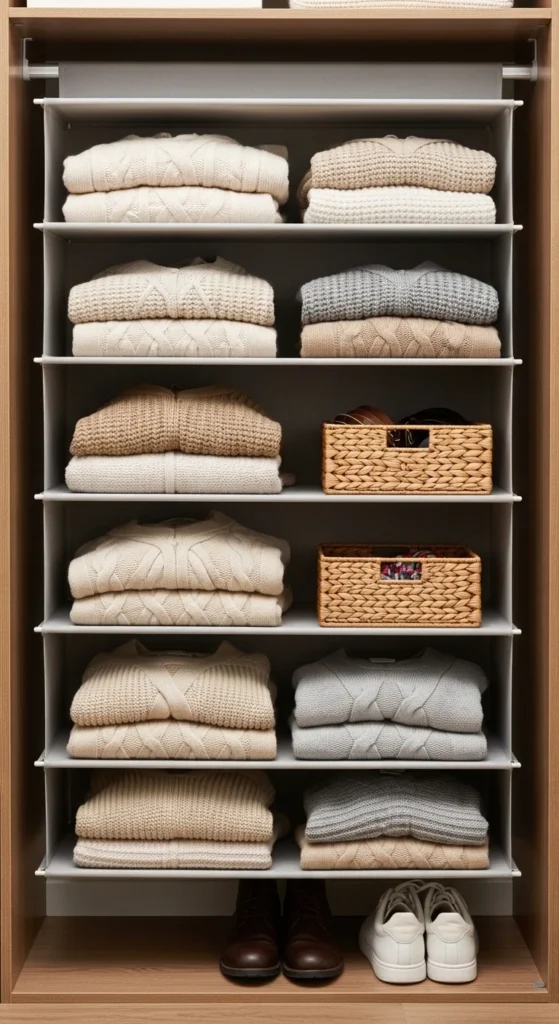
Fabric hanging shelves are perfect for folded items or accessories. They use vertical space effectively and cost very little. Install over the rod or on hooks. Fold t-shirts, sweaters, or scarves and place them on each shelf. Small baskets can hold belts, socks, or jewelry. The flexibility allows you to change what goes where as seasons shift. For DIY, use sturdy cardboard covered in fabric to create lightweight hanging shelves that fit any space.
3. Install a Double Hanging Rod
[Image Prompt: Two parallel metal hanging rods installed in a small closet, the top rod holding blouses and jackets, the lower rod holding pants and skirts.]
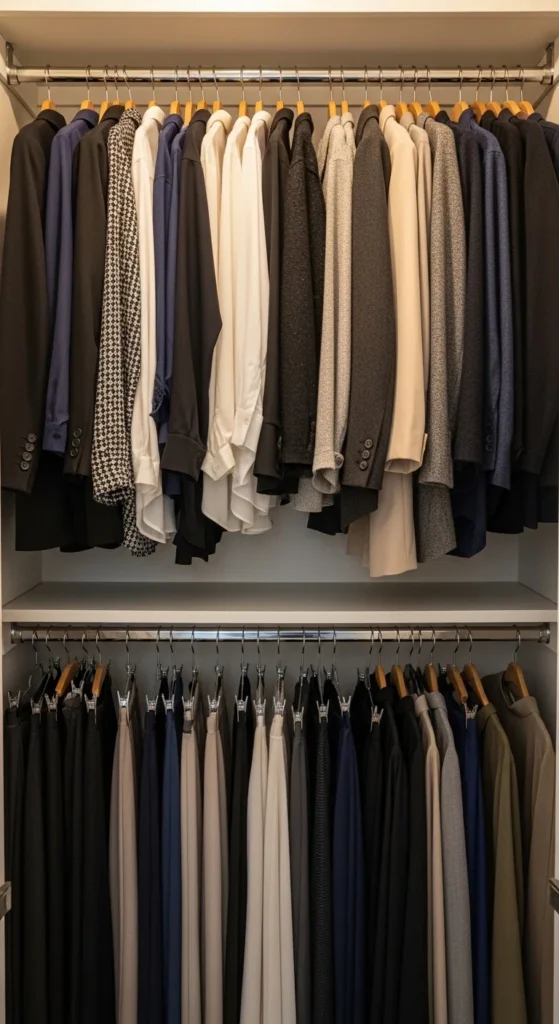
Double rods double hanging space without adding more closet width. Hang shorter garments on the lower rod and longer items on top. This works well for workwear, casual clothes, or children’s closets. Adjustable rods are easy to move as your storage needs change. For renters, tension rods are a damage-free option. This setup instantly creates more room and keeps everything visible at a glance.
4. Use Clear Storage Bins
[Image Prompt: Transparent plastic bins neatly stacked on a high closet shelf, containing folded clothes, handbags, and seasonal items.]
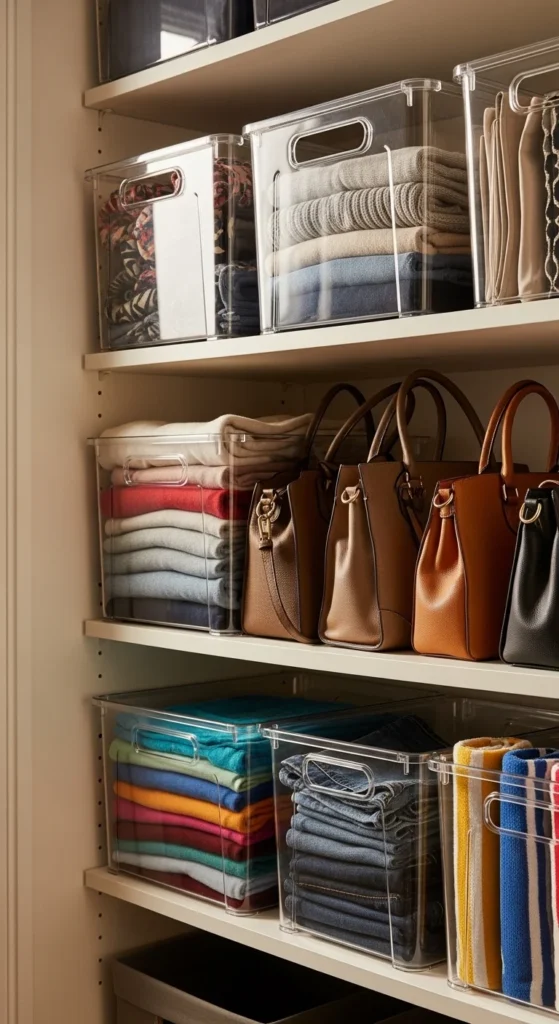
Clear bins make it simple to see what’s inside. Use them for out-of-season clothes, hats, or handbags. Label the bins with a small sticky note for added clarity. Stackable bins save valuable shelf space. For a DIY twist, reuse old shoeboxes and cover them in clear plastic wrap. Being able to spot items quickly reduces clutter and frustration.
5. Add Pull-Out Drawers
[Image Prompt: Wooden pull-out drawers in a small closet, storing socks, underwear, and folded T-shirts, photographed from above showing easy accessibility.]
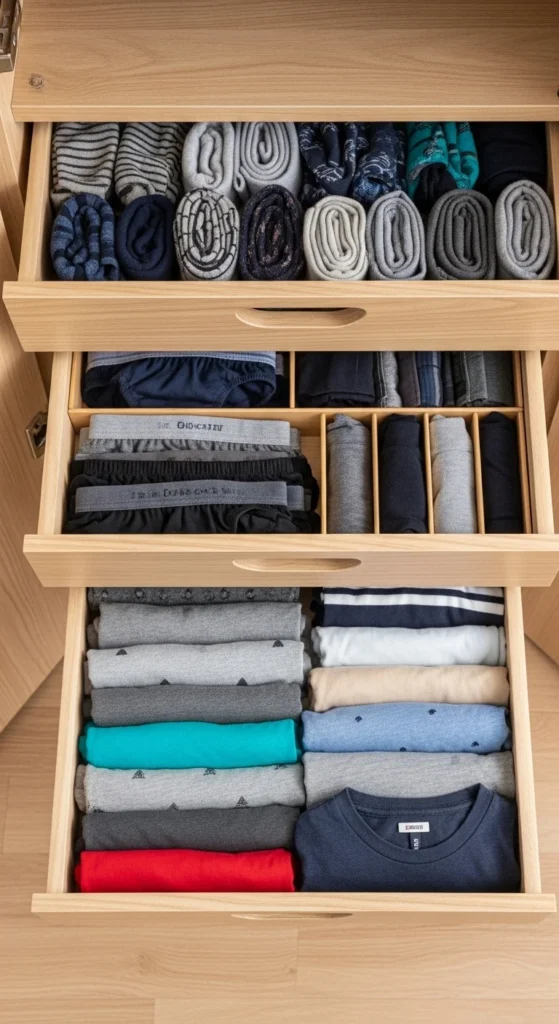
Pull-out drawers maximize deep shelf space. Keep small items like socks, underwear, or accessories tucked neatly. Rolling out drawers makes retrieval easy. You can install inexpensive pre-made units or DIY with shallow crates and small wheels. Organize by category and rotate seasonally. This method keeps your closet floor clear and makes daily dressing faster.
6. Hang Hooks on the Door
[Image Prompt: Several decorative hooks mounted on the inside of a closet door, holding handbags, scarves, and belts.]
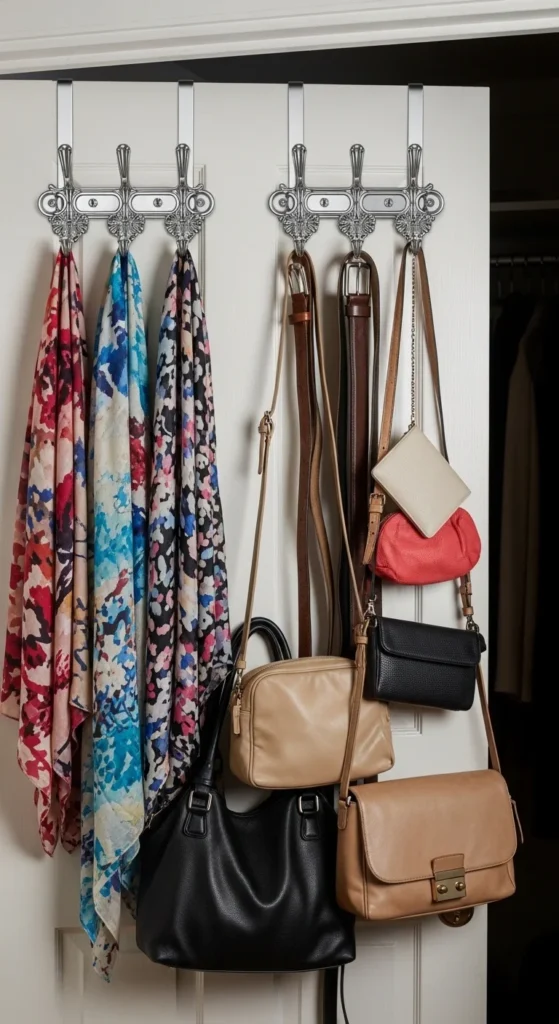
Hooks on the door utilize an often-overlooked space. Hang belts, hats, scarves, or bags. This keeps frequently used items accessible without cluttering shelves. Adhesive hooks are perfect for renters. For DIY, a thin wooden plank with evenly spaced hooks works as an attractive and inexpensive solution. Doors become a functional storage spot instantly.
7. Use Shelf Dividers
[Image Prompt: White plastic dividers separating folded sweaters on a closet shelf, creating neat vertical stacks.]
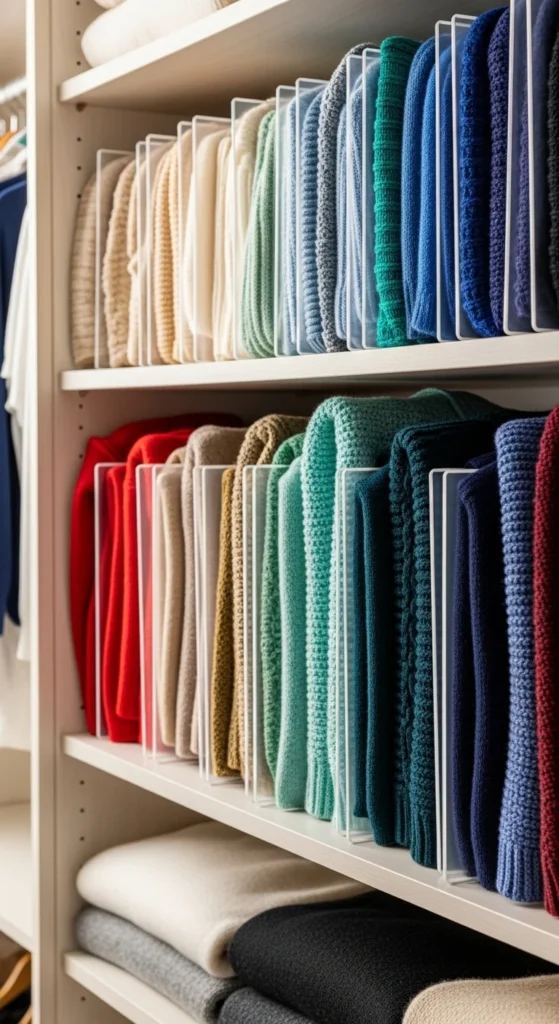
Shelf dividers prevent piles from toppling. Use them on shelves with folded clothes, towels, or jeans. They maintain vertical stacks and keep items visible. You can repurpose cardboard or wooden strips as DIY dividers. This method works especially well for small closets where shelves hold multiple layers. Organized stacks make it easier to pick clothes without creating mess.
8. Store Shoes Vertically
[Image Prompt: A vertical shoe rack in a closet corner, holding sneakers, boots, and flats, with pairs neatly arranged.]
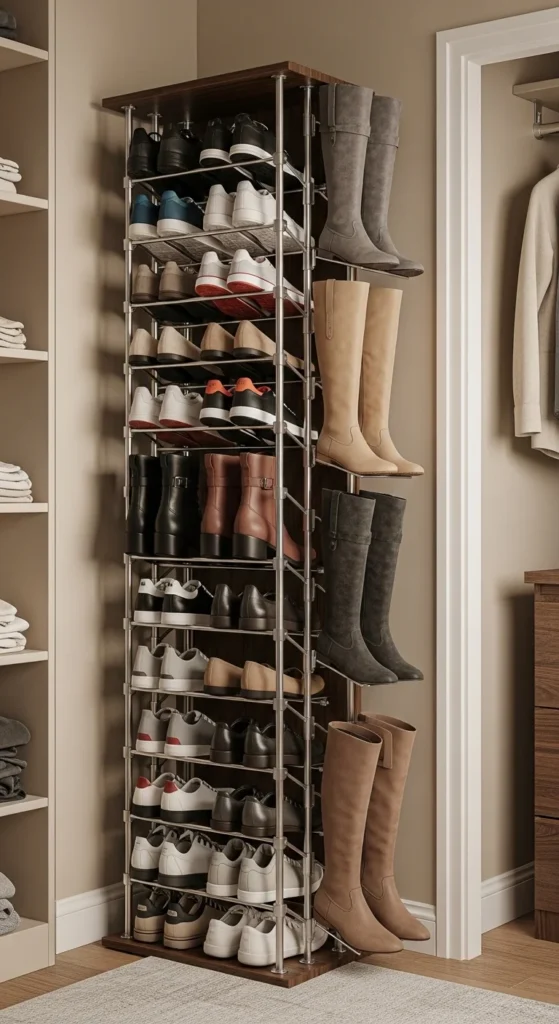
Vertical shoe racks save floor space and display shoes clearly. Use cubbies, hanging racks, or stackable boxes. Keep everyday shoes within reach and seasonal shoes higher up. DIY options include repurposing a wine crate stack or tension rods for heels. This approach prevents shoes from piling up and makes the closet look clean instantly.
9. Use Hanging Bags for Accessories
[Image Prompt: A small closet rod with a hanging organizer holding multiple clear pouches for jewelry, sunglasses, and small items.]
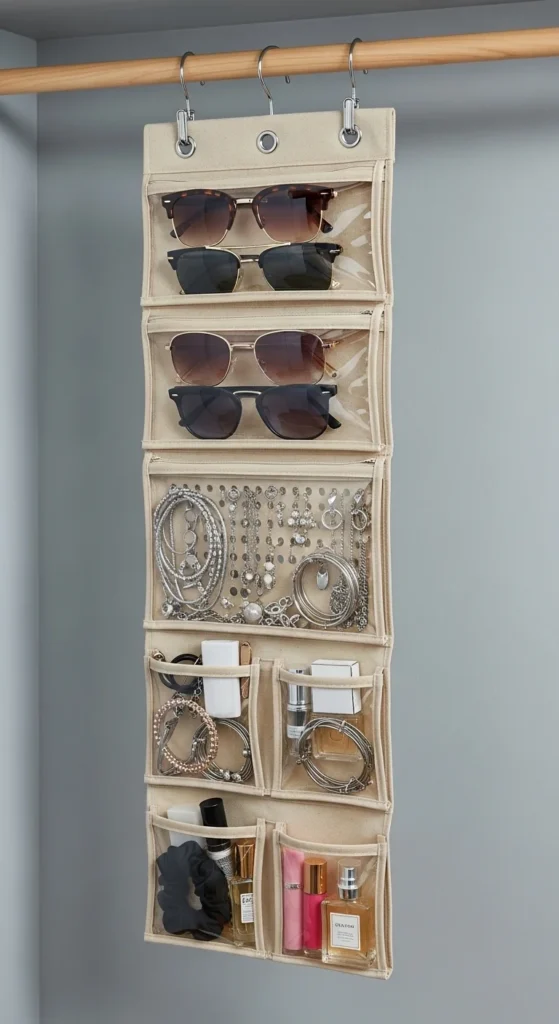
Hanging bags or pocket organizers store small accessories efficiently. Attach them to rods or hooks to keep items visible. Pouches can hold earrings, necklaces, or belts. DIY options include repurposing old fabric bags with sewn-in pockets. This keeps delicate items safe, easy to find, and off shelves, maximizing your closet’s main space.
10. Rotate Seasonal Items
[Image Prompt: Closet shelves with labeled bins for summer and winter clothes, sunlight highlighting the neat arrangement.]
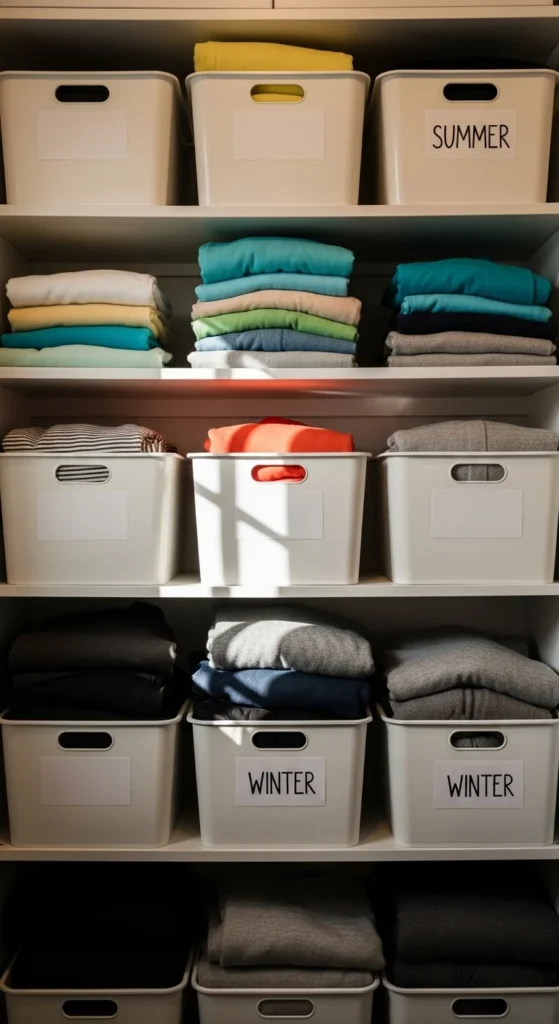
Store off-season clothes in bins or under-bed storage. Rotate them every few months. This frees up hanging and shelf space for current items. Label boxes clearly to avoid unnecessary digging. DIY solutions include large tote bags or vacuum storage bags. Rotating seasonal items prevents overcrowding and keeps daily choices simple.
11. Hang a Scarf Ladder
[Image Prompt: A small wooden ladder attached to the closet wall, holding multiple colorful scarves neatly draped over each rung.]
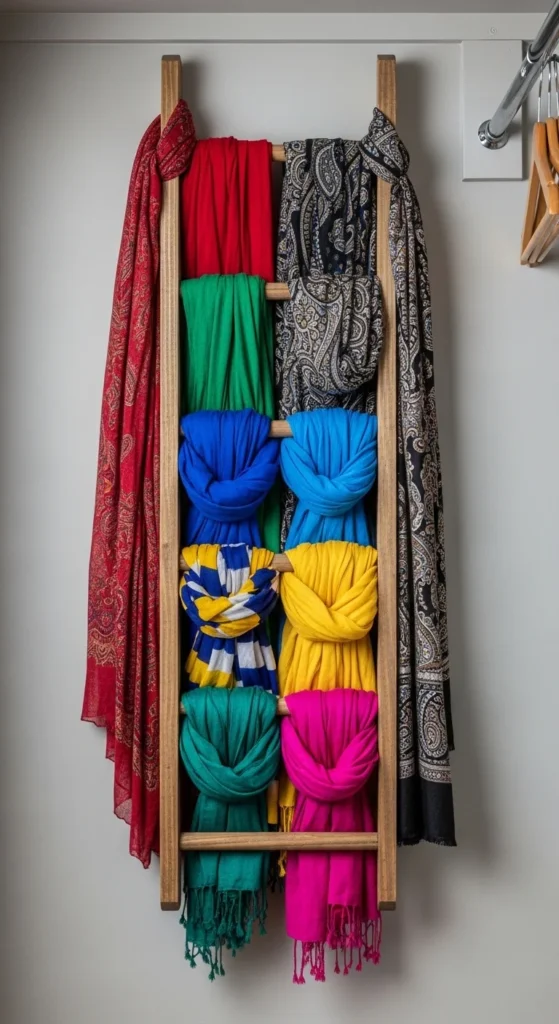
A scarf ladder keeps scarves visible and untangled. Lean it against a wall or hang on the closet side. Use every rung for a different pattern or color. DIY ladders can be made from thin wooden dowels or leftover trim. This method saves drawer space and turns scarves into a decorative element while being practical.
12. Use Tension Rods for Extra Space
[Image Prompt: Two tension rods installed at different heights in a closet, one holding hanging pants, the other holding scarves.]
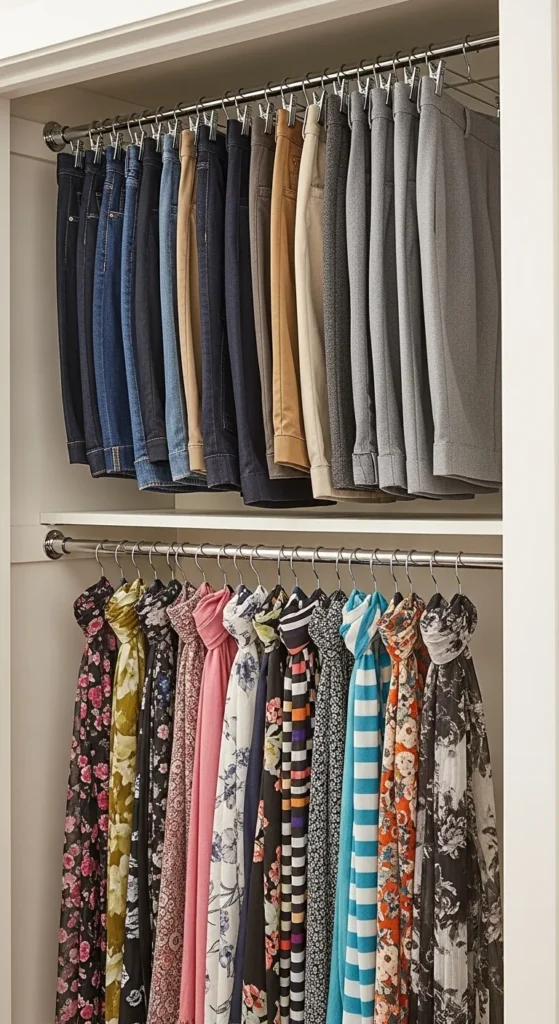
Tension rods are versatile and renter-friendly. Add rods for pants, skirts, scarves, or handbags. Adjust heights as needed. They create additional hanging space without permanent installation. Use inexpensive spring rods or repurpose shower rods. Tension rods make it easy to organize layers without cluttering shelves.
13. Utilize the Closet Ceiling
[Image Prompt: A small shelf installed near the top of the closet, storing boxes and hats, shot from below for perspective.]
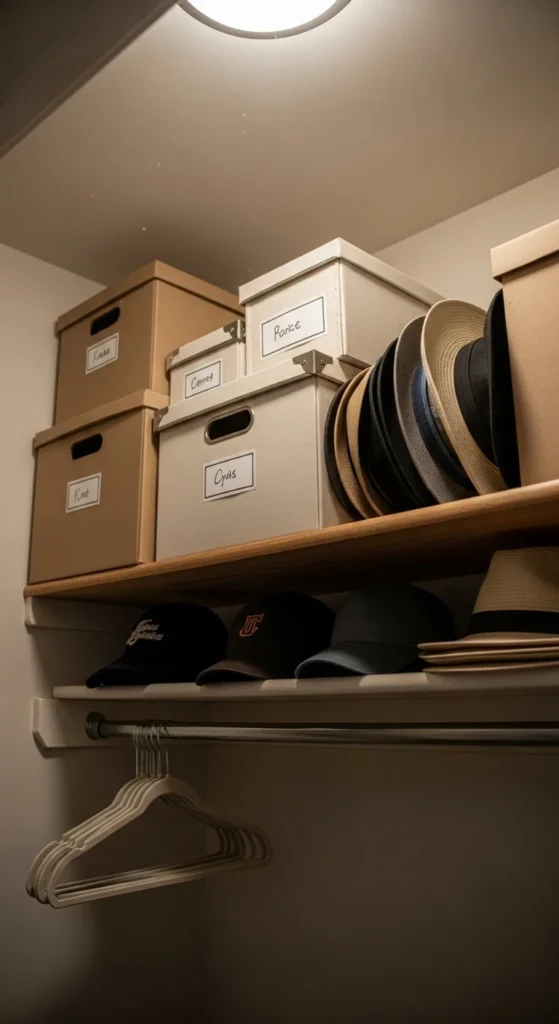
Ceiling space is often wasted. Add a small shelf for storage bins, hats, or rarely used items. Use sturdy crates or baskets for easy access. For a DIY version, mount plywood or reclaimed wood with brackets. Storing items overhead frees lower shelves for daily essentials and keeps the closet looking tidy.
14. Use Stackable Drawers for Accessories
[Image Prompt: Clear acrylic stackable drawers in a closet corner, holding jewelry, belts, and watches.]
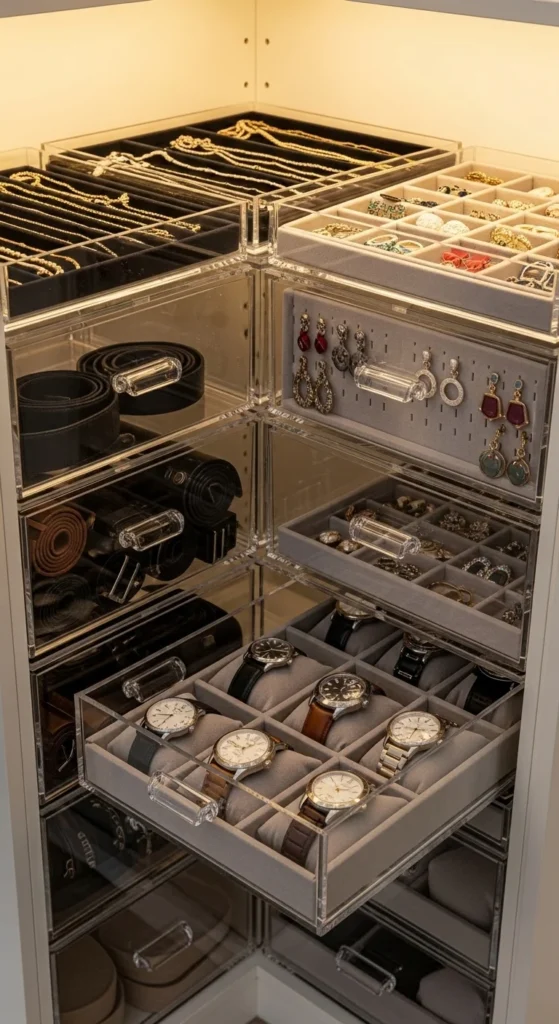
Stackable drawers are perfect for accessories. Keep small items grouped and visible. Acrylic versions let you see contents at a glance. Stack as high as your shelf allows. For DIY, use plastic crates or repurposed containers with lids. Stackable drawers are inexpensive, customizable, and make the closet look organized without bulk.
15. Add a Jewelry Board
[Image Prompt: A small pegboard on the closet wall with earrings, necklaces, and bracelets hung neatly.]
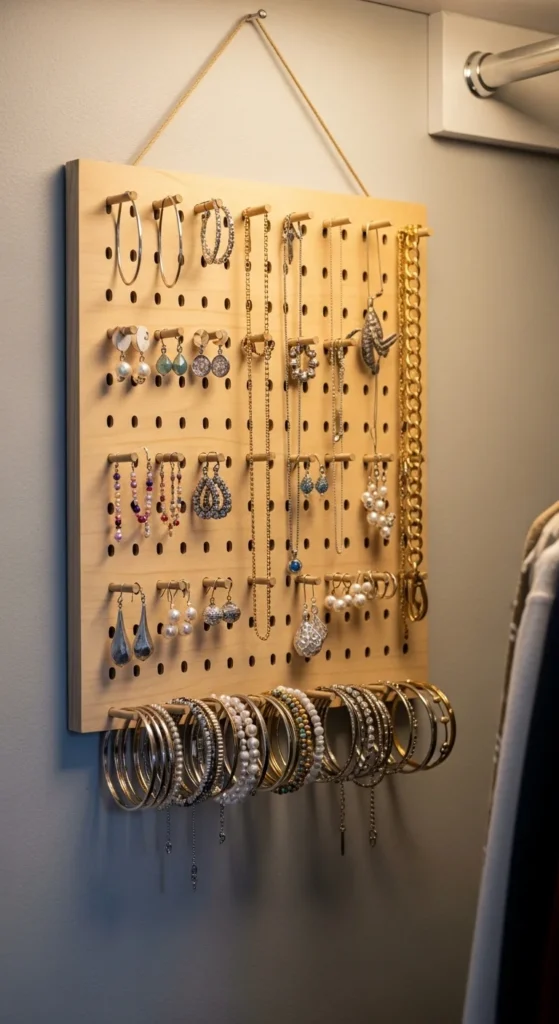
A jewelry board displays items clearly and prevents tangles. Use a pegboard, corkboard, or a small frame with hooks. Group by type or color for easy access. DIY options include cork tiles or a shallow box frame with mesh. This keeps delicate pieces accessible and visible without taking shelf space.
16. Fold Clothes Vertically
[Image Prompt: Closet drawers with vertically folded T-shirts arranged like files, photographed from above.]
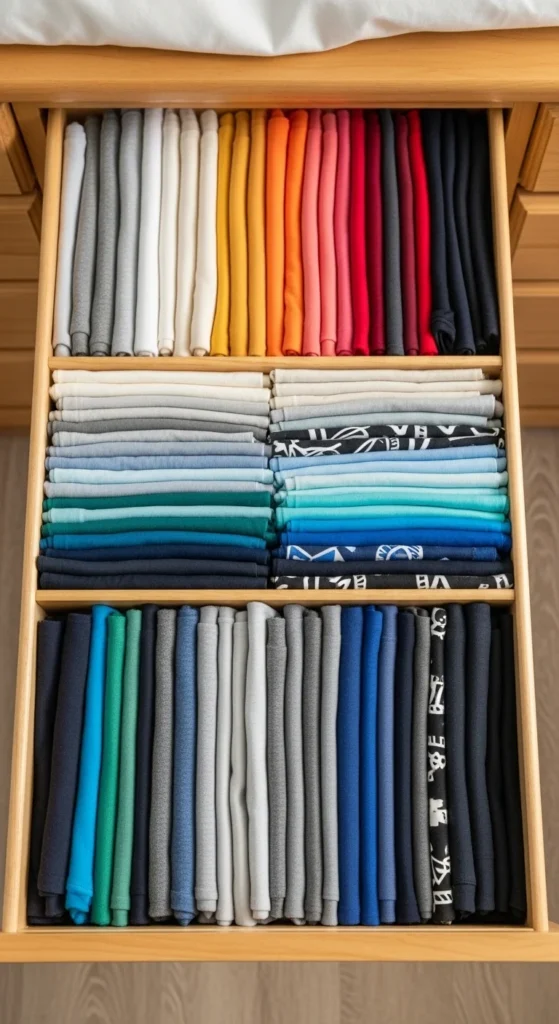
Folding clothes vertically in drawers saves space and makes it easy to see every item. Great for T-shirts, pants, or workout clothes. This method prevents messy piles and keeps the drawer organized. DIY tips: use cardboard dividers or small bins to keep folds upright. You’ll save time picking outfits daily.
17. Hang Pants on Clips
[Image Prompt: Several pairs of pants neatly hung on clip hangers, spaced evenly on a rod.]
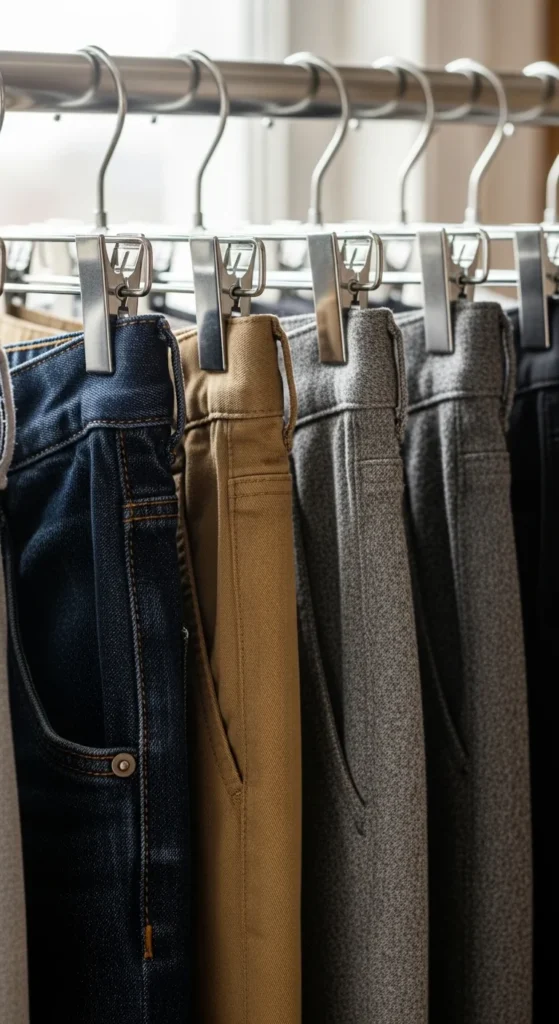
Clip hangers prevent pants from wrinkling and save shelf space. Hang multiple pairs vertically to maximize rod length. Inexpensive clips or DIY options with binder clips and hangers work well. This method keeps pants accessible, neat, and visible, reducing clutter on shelves.
18. Use Over-the-Rod Baskets
[Image Prompt: Wire baskets hanging from a closet rod, holding folded shirts and small bags.]
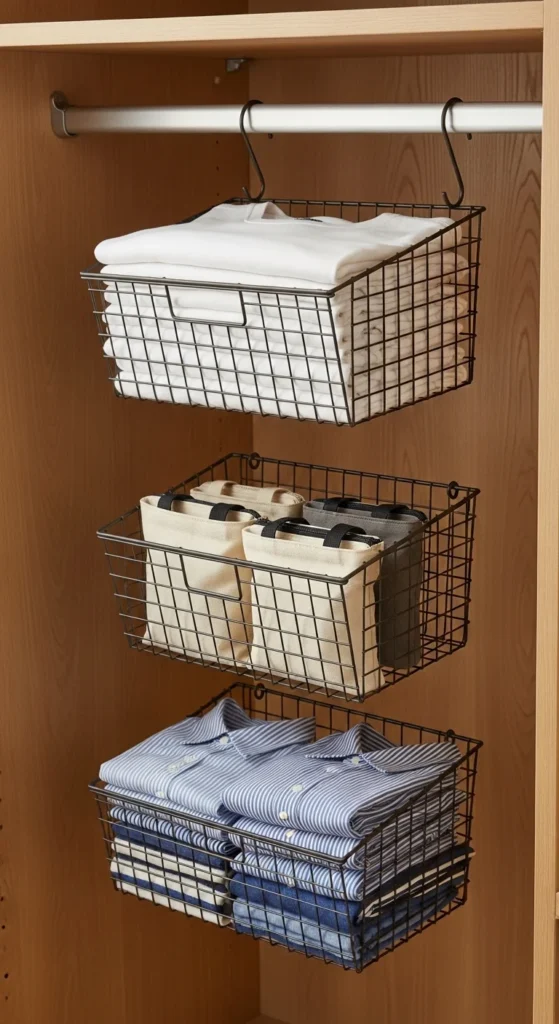
Baskets over the rod add storage without taking floor space. Store folded items, bags, or accessories. Wire baskets let you see contents, while fabric baskets keep delicate items dust-free. DIY options include repurposing old baskets with hooks. They add flexible storage to every closet rod.
19. Label Everything
[Image Prompt: Small, neatly printed labels on clear bins and baskets in a closet, sunlight highlighting the text.]
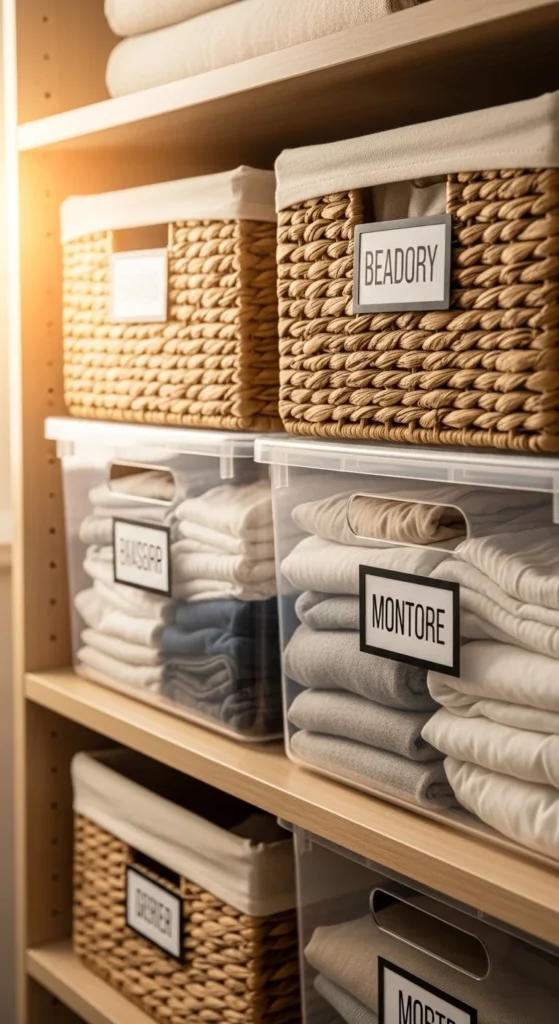
Labeling helps identify items quickly. Use stickers, tags, or simple printed labels. Works on bins, drawers, and shelves. DIY ideas: write on masking tape or repurpose gift tags. Labels prevent clutter and make organization effortless, especially when multiple people share a closet.
20. Use a Closet Caddy
[Image Prompt: A hanging caddy with multiple compartments holding folded socks, belts, and scarves.]
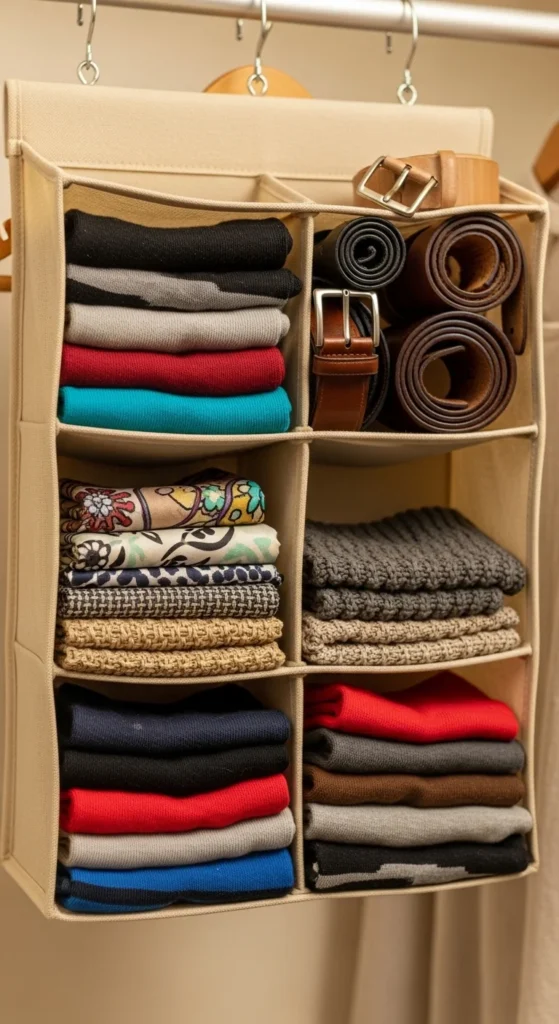
Closet caddies store small items neatly. Hang on rods or hooks. Use compartments for socks, belts, and scarves. DIY options include sewing compartments into old fabric bags or reusing divided storage boxes. Caddies keep items contained and easy to grab, freeing drawer and shelf space.
21. Repurpose Shoe Boxes
[Image Prompt: Clear shoeboxes stacked on a closet shelf with shoes inside, each box labeled.]
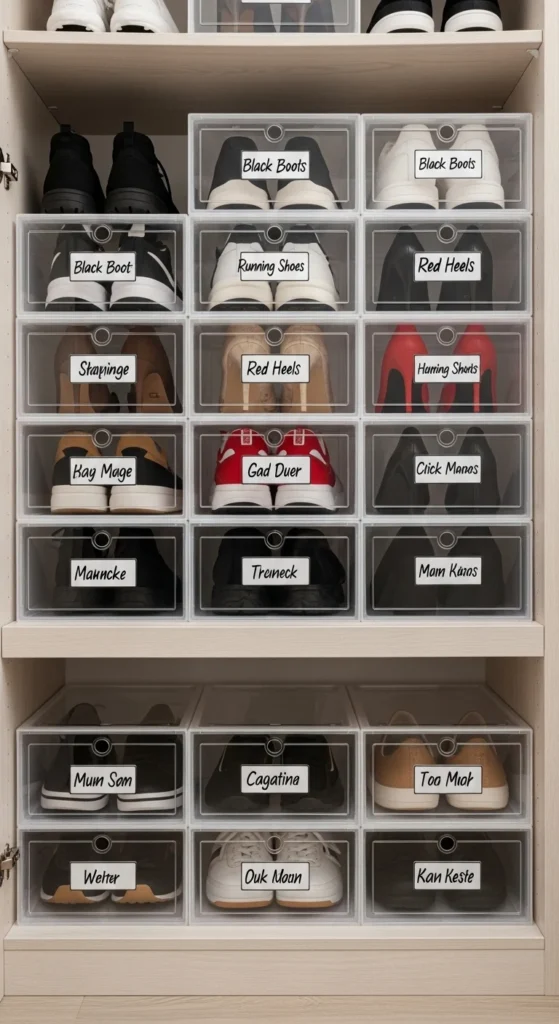
Clear shoe boxes save floor space and protect shoes from dust. Stackable boxes make use of vertical space. Label boxes for quick access. For DIY, cover cardboard boxes with contact paper for a neat look. This method keeps shoes organized and makes small closets look tidier instantly.
22. Keep a Donation Box
[Image Prompt: A small, open box at the bottom of a closet, partially filled with old clothes ready for donation.]
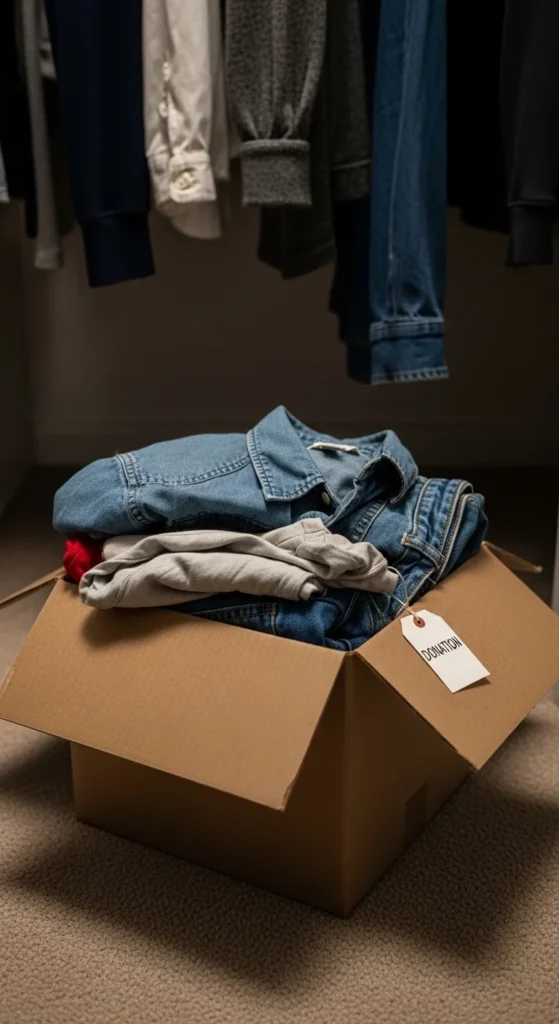
A donation box encourages decluttering. Place it in a corner for easy access. Add items you no longer wear. When full, donate and reset the box. A DIY approach: decorate a cardboard box for a neat, intentional spot. This habit prevents closet overflow and keeps your wardrobe manageable year-round.
Conclusion
A small closet can feel spacious and functional with the right strategies. Using vertical space, clever hangers, bins, and DIY solutions makes a big difference. Simple swaps like slimline hangers, pull-out drawers, or hooks on the door create accessible, organized storage. Consistent rotation and decluttering keep the closet practical. These 22 ideas are affordable, easy, and effective, so start implementing them today to enjoy a neat, stress-free closet.

Leave a Reply