

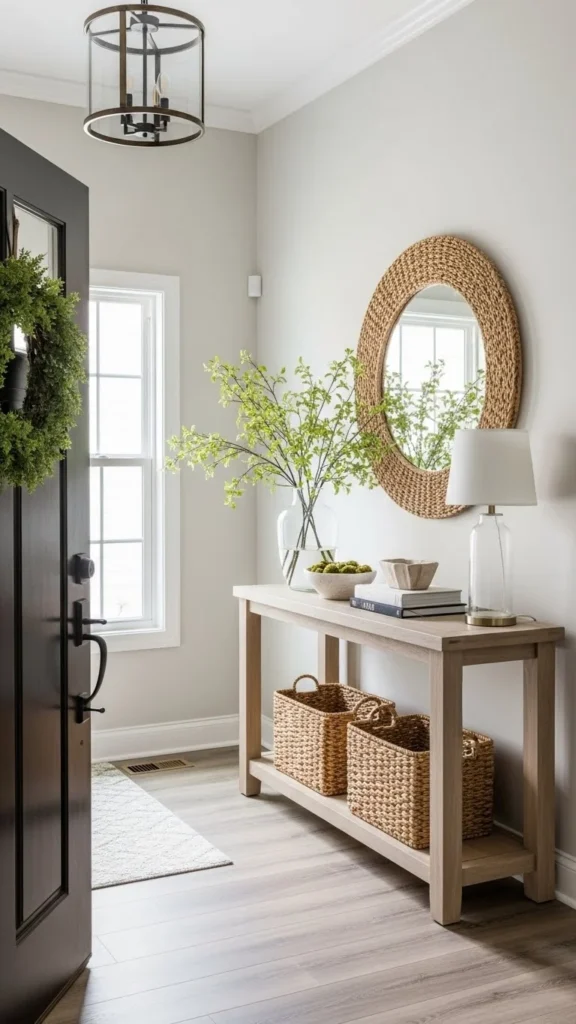
Your entryway sets the tone for the entire home. It’s the first thing guests see and the last space you pass through each day. Spring is the perfect time to give it a lighter, more welcoming feel using simple updates that fit real budgets. Small swaps can change how the space feels without major work. The ideas below focus on easy actions, simple styling, and DIY-friendly updates that help your entryway feel warm, organized, and ready for the season.
1. Light Wood Console Table Styling
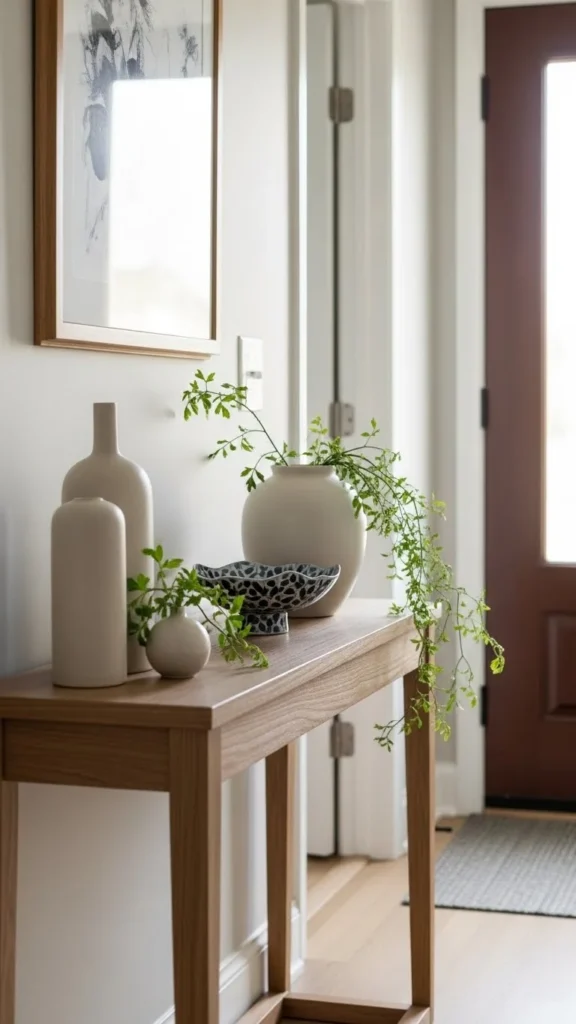
A light wood console table instantly softens an entryway. It adds warmth without feeling heavy. Choose a narrow design so the walkway stays clear. Style it simply. A small bowl for keys. One ceramic vase. One framed print leaning against the wall.
Keep spacing loose. Crowding makes the area feel tight. Leave breathing room on both sides. If buying new isn’t an option, sand and stain an older table in a lighter tone. Even peel-and-stick wood veneer can work for a budget update.
Add function without clutter. A shallow drawer keeps small items hidden. Baskets underneath store shoes or bags. This setup works well in small spaces and larger foyers alike.
Stick to neutral finishes so the table works year-round. You can swap decor later without replacing furniture. This single piece often becomes the anchor for the entire entryway.
2. Woven Basket Shoe Storage
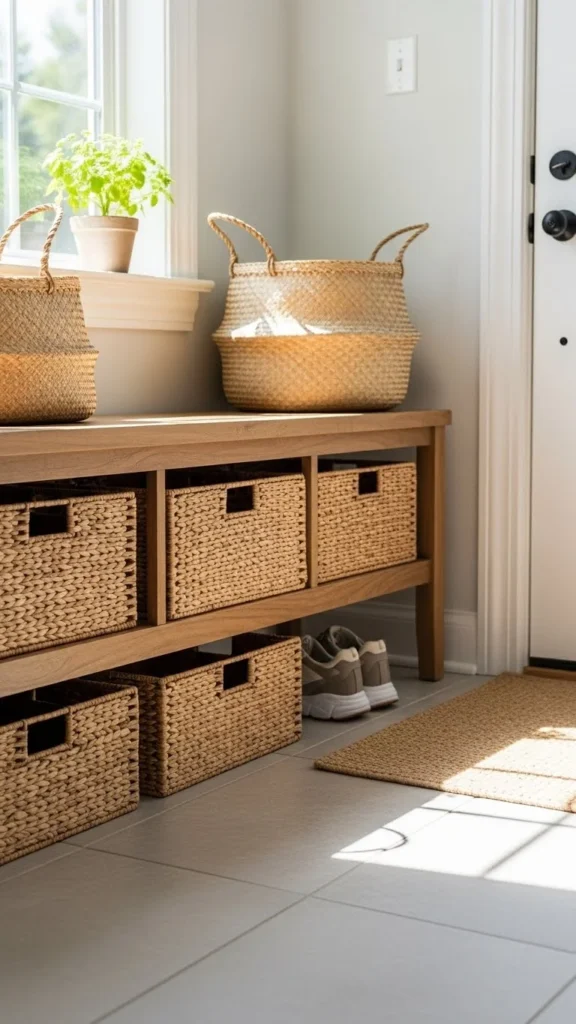
Shoes at the door can look messy fast. Woven baskets solve that problem while adding texture. Choose baskets with structure so they hold their shape. Place two or three under a bench or console table.
Labeling isn’t required. Assign each basket by family member instead. This keeps the system simple and easy to maintain. If baskets feel pricey, thrift stores often carry solid options.
Line the bottom with a washable mat. This protects floors and helps with cleanup. Taller baskets work well for boots. Shorter ones handle everyday shoes.
The natural material softens the space and pairs well with wood, tile, or laminate floors. It also hides visual clutter without closed cabinets. That balance keeps the entryway tidy while still feeling open and lived-in.
3. Soft Neutral Entryway Rug
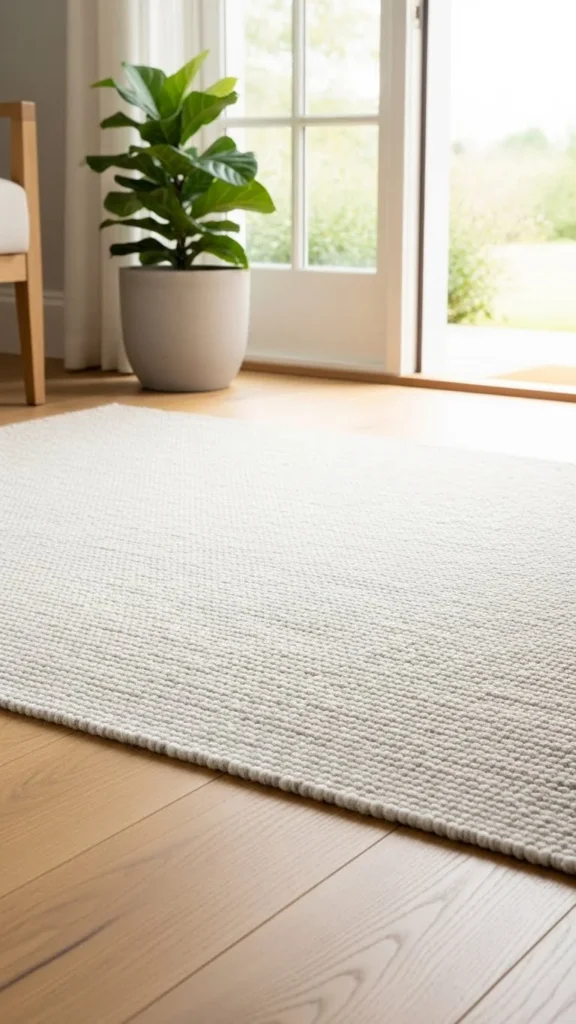
A rug defines the entryway and protects floors. Choose a low-pile option so doors open easily. Neutral colors work best for spring because they reflect light and pair with many styles.
Look for washable rugs if possible. Entryways see dirt often. Being able to toss the rug in the washer saves time and effort. If washable isn’t an option, choose darker neutrals that hide marks.
Size matters. The rug should sit fully inside the space, not halfway under furniture. This helps the area feel intentional rather than cramped.
Layering also works. A flat woven rug topped with a smaller mat adds texture without bulk. This is an easy way to reuse items you already own. Rugs do a lot of visual work with very little effort.
4. Wall Hooks for Daily Essentials
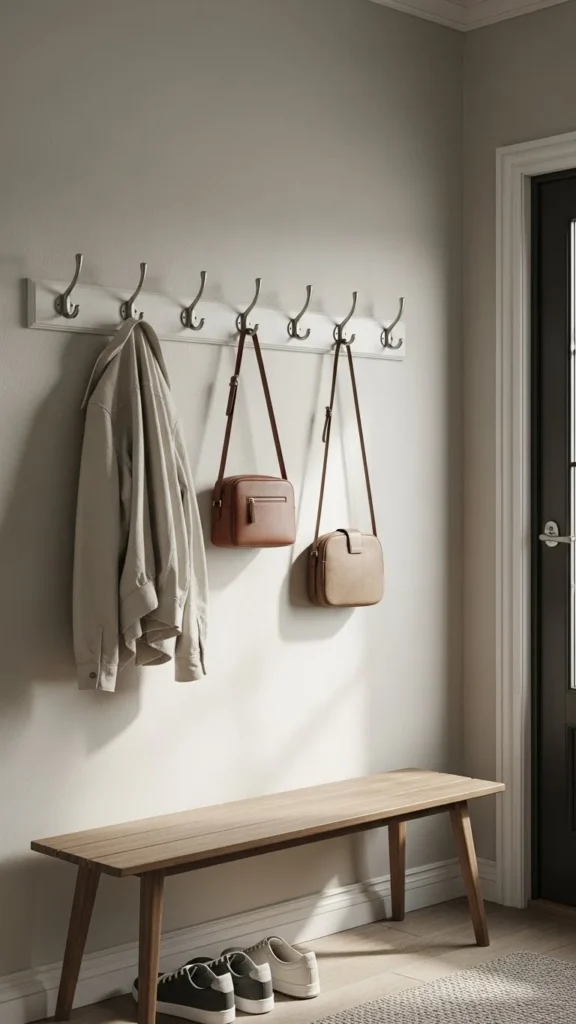
Wall hooks are practical and affordable. Install them at staggered heights for visual interest. This also makes them usable for both adults and kids.
Choose simple shapes in wood or metal. Avoid oversized hooks that dominate the wall. Space them evenly to prevent crowding. Hooks work well behind doors, along narrow walls, or above benches.
Limit what hangs there. Keep only daily items on display. Seasonal coats and extra bags belong elsewhere. This keeps the area looking tidy.
If drilling isn’t an option, adhesive hooks rated for heavier weight can work. Just clean the wall first. This small change adds organization without furniture or floor space.
5. Entryway Mirror to Open the Space
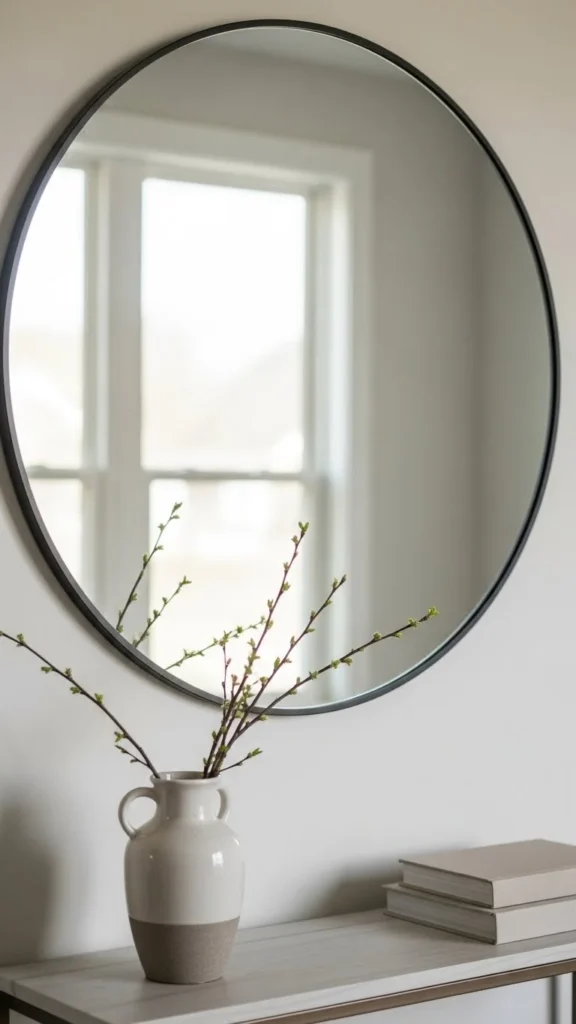
A mirror makes an entryway feel larger and brighter. Round mirrors soften sharp lines. Rectangular mirrors feel structured and classic. Choose based on your home’s style.
Hang the mirror at eye level. It should reflect light, not the ceiling. Placing it across from a window works well if possible.
Mirrors don’t need heavy frames. Thin wood or metal frames feel light and simple. Thrift stores often carry solid mirrors that just need a frame update.
Besides style, mirrors add function. A quick check before heading out is always helpful. This single piece can change how the entire space feels without much effort.
6. Simple Entryway Bench Seating
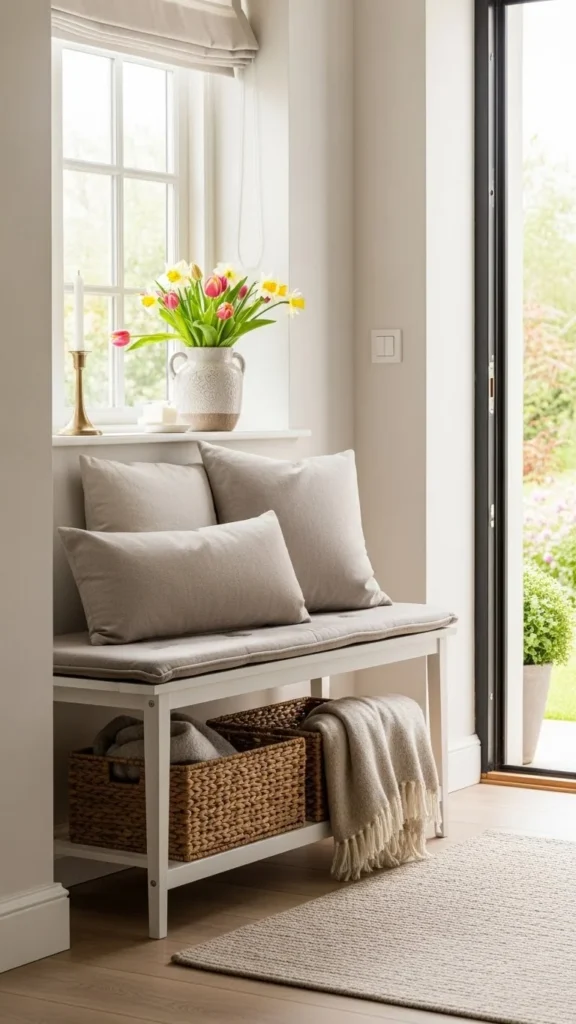
A bench makes an entryway feel welcoming and usable. It gives guests a place to sit and makes shoe changes easier. Choose a slim design to keep walkways clear.
Wood benches feel warm and casual. Upholstered benches add comfort but should be easy to clean. Removable cushions work well.
Use baskets underneath for storage. This keeps the surface clear and adds function. If buying new isn’t possible, repurpose a small dining bench or even a sturdy coffee table.
Add one pillow at most. Too many make the bench unusable. The goal is comfort without clutter. A bench often becomes the most used piece in the entryway.
7. Greenery in Simple Planters
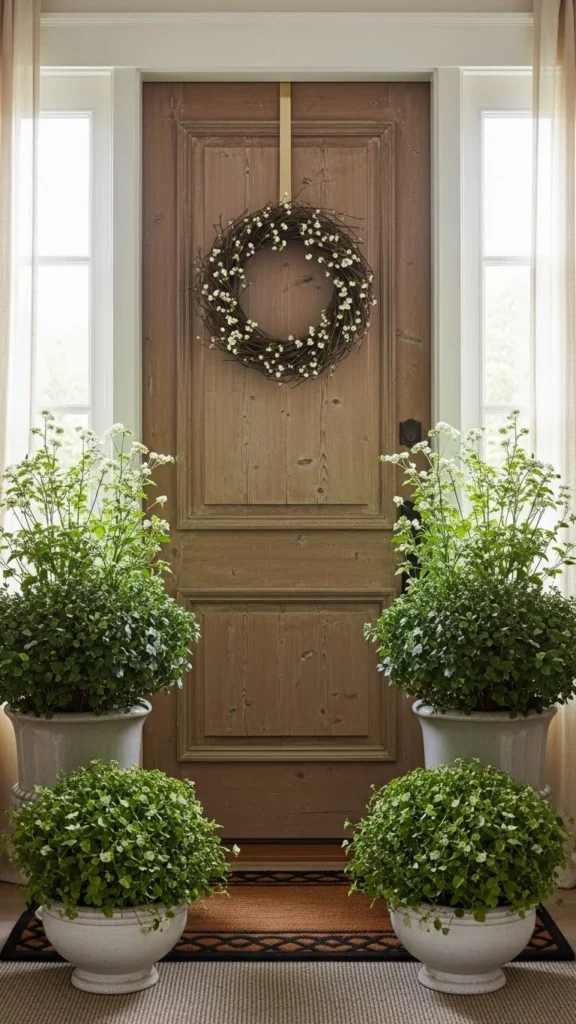
Plants add life to an entryway. Choose low-maintenance options that tolerate indoor light. Snake plants, pothos, or faux greenery all work.
Keep planters simple. Ceramic or clay pots in neutral shades blend easily. Avoid busy patterns that distract from the space.
Use one or two plants only. Too many crowd the area. Floor plants work well in corners. Small plants fit nicely on consoles.
If using faux plants, keep them clean. Dust builds quickly and dulls the look. Greenery brings warmth without permanent changes or high cost.
8. Seasonal Door Mat Swap
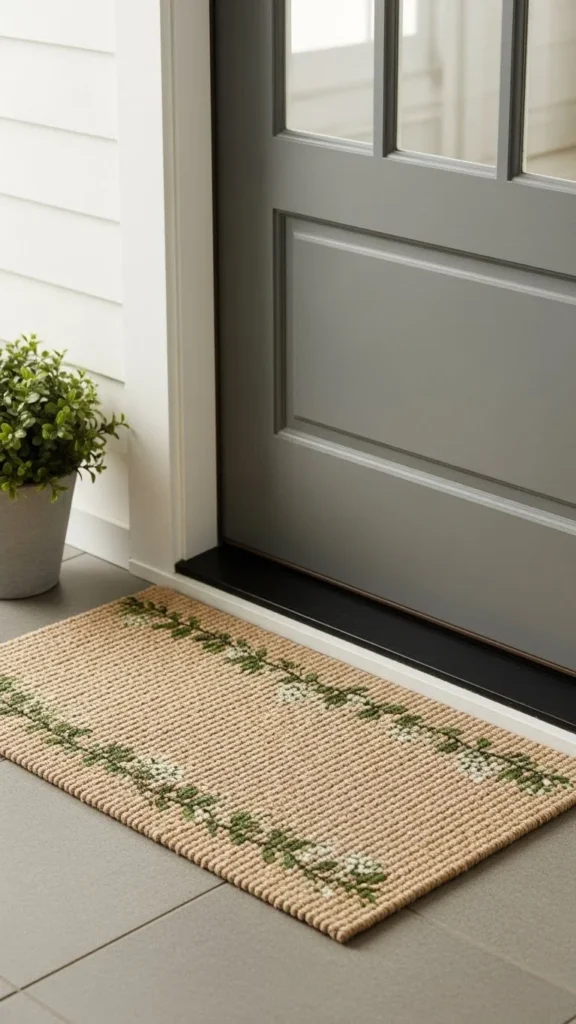
A new door mat signals a seasonal shift right away. Choose natural fibers like coir or woven blends. Stick with simple patterns.
Avoid mats with phrases or graphics. Clean designs age better and work longer. Size the mat so it fits the door width comfortably.
Layering mats works well. Place a larger neutral mat under a smaller woven one. This adds depth without clutter.
Door mats take a lot of wear. Swapping them is an easy way to refresh the entry without spending much. Store off-season mats flat to extend their life.
9. Neutral Wall Art Near the Door
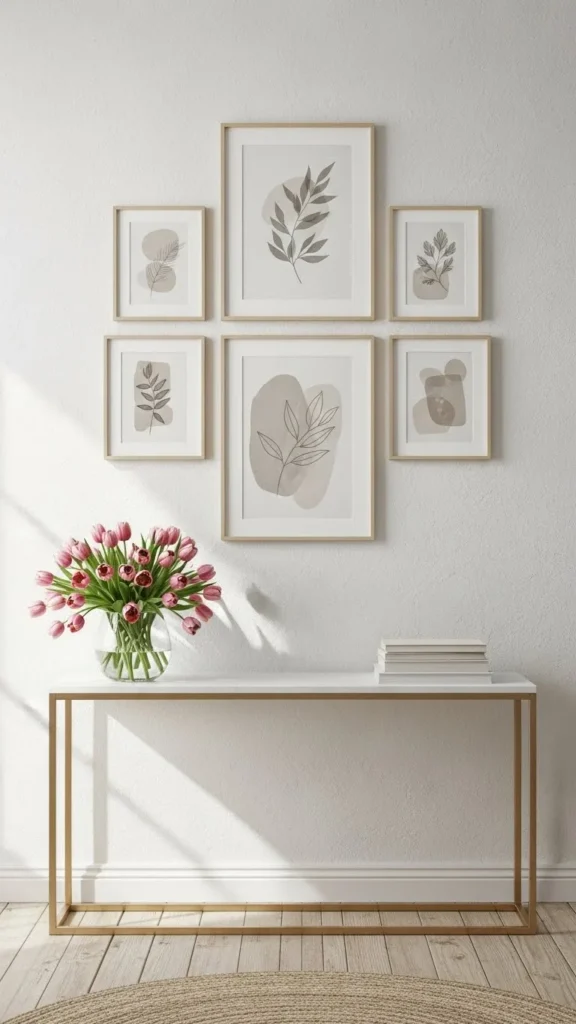
Wall art adds personality. Choose pieces with soft colors and simple subjects. Landscapes, abstract shapes, or line drawings work well.
Frames should match nearby finishes. Wood with wood. Metal with metal. This keeps the look cohesive.
Use one large piece or a pair. Avoid cluttered gallery walls in tight spaces. The goal is calm, not visual noise.
Printable art can save money. Use quality paper and solid frames. Small details like matting make inexpensive art look intentional.
10. Small Tray for Daily Items
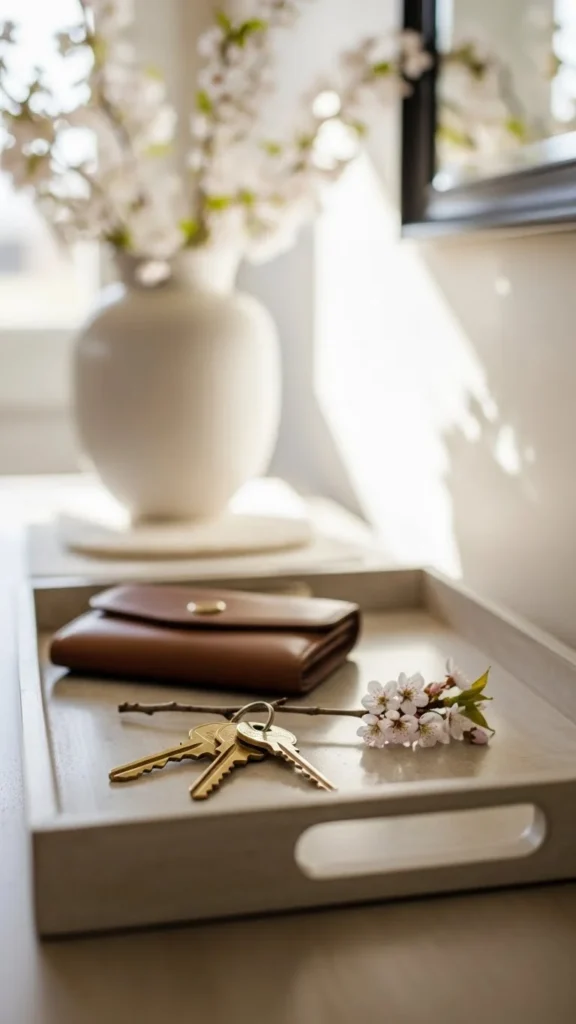
Trays keep small items contained. Keys, sunglasses, and mail stay in one spot. This reduces daily stress.
Choose a tray that fits the table scale. Too large feels heavy. Too small becomes useless. Wood, ceramic, or metal all work.
Keep contents limited. If it overflows, edit it. A tray only works if it stays tidy.
This is a simple addition that adds both function and polish. It’s easy to change seasonally without replacing furniture.
11. Entryway Lighting with Soft Glow
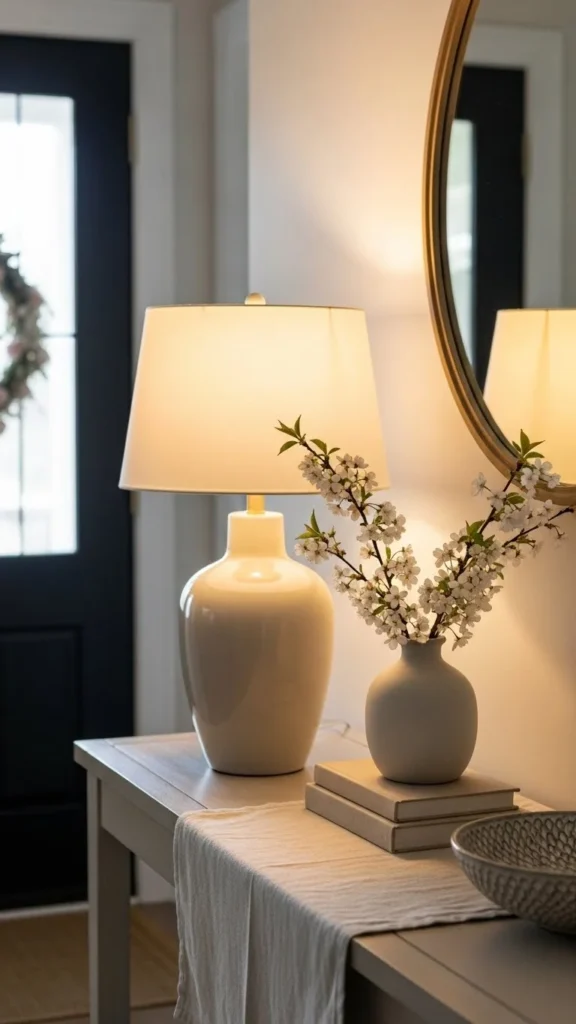
Lighting changes how an entryway feels. Overhead lights can feel harsh. A table lamp adds warmth.
Choose a lamp with a light-colored shade. This spreads light gently. Place it near a mirror to reflect brightness.
If outlets are limited, battery lamps work well. Many look just as good as wired options.
Good lighting makes the entry feel welcoming at any hour. It’s a small detail with big impact.
12. Minimal Coat Storage Rotation
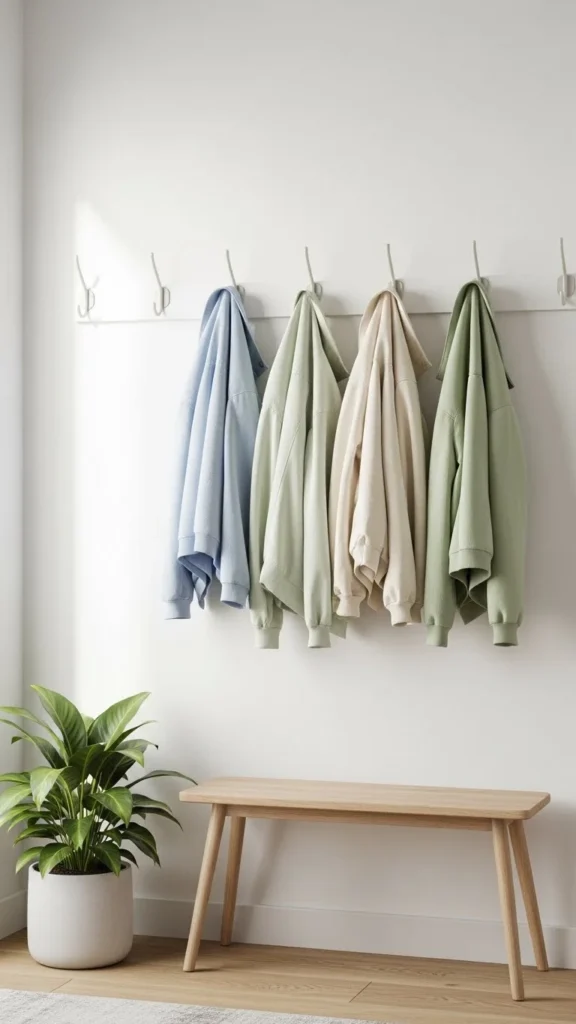
Rotate coats with the season. Keep only what you use daily. Store heavy outerwear elsewhere.
This instantly makes the space feel lighter and more open. Fewer items mean less visual clutter.
Use matching hangers if possible. This small step creates a tidy look. It also makes items easier to grab.
Regular edits keep the entryway functional and calm without buying anything new.
13. Neutral Umbrella Stand
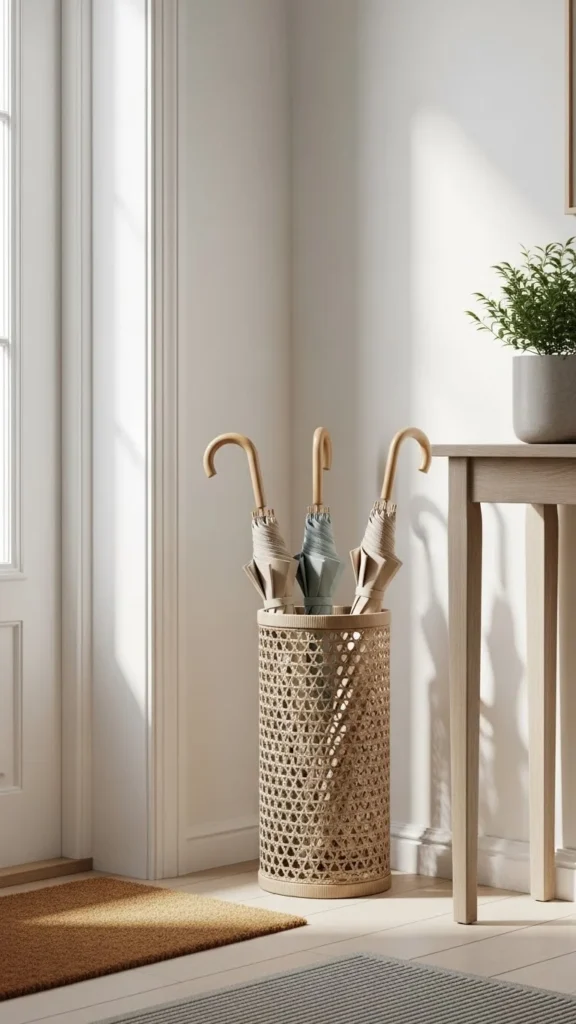
Umbrellas need a home. A simple stand prevents water drips and clutter.
Choose a narrow design that fits corners. Metal or ceramic options work well.
Keep only a few umbrellas inside. Extras can live in storage. This keeps the stand neat.
It’s a practical piece that quietly improves daily routines.
14. Entryway Shelf for Small Decor
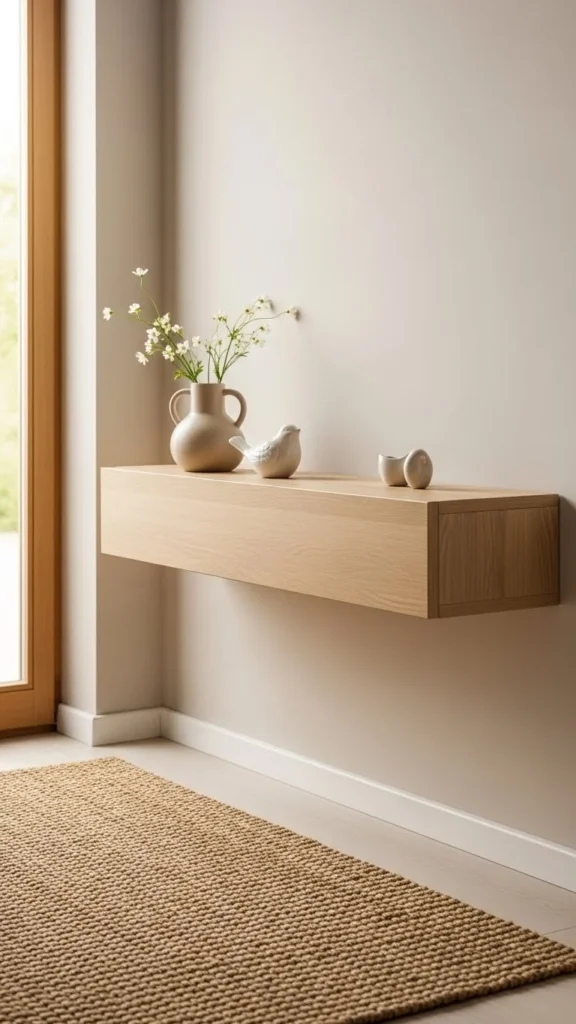
Floating shelves save floor space. Install one at eye level.
Style lightly. One vase. One framed piece. One small object. Stop there.
This works well in narrow entryways where furniture won’t fit.
Shelves are budget-friendly and easy to update over time.
15. Light Fabric Door Curtain
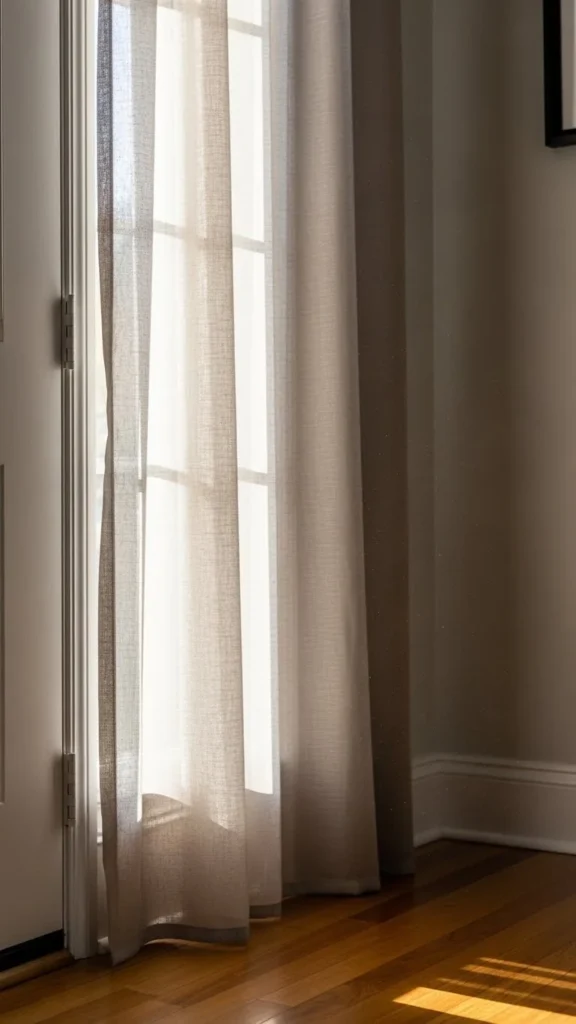
If your door has glass, a light curtain adds privacy without blocking light.
Choose simple fabrics in neutral shades. Avoid heavy textures.
Rod placement matters. Hang it high to keep the space feeling open.
This is a renter-friendly update that changes the mood quickly.
16. Seasonal Scent with Natural Elements
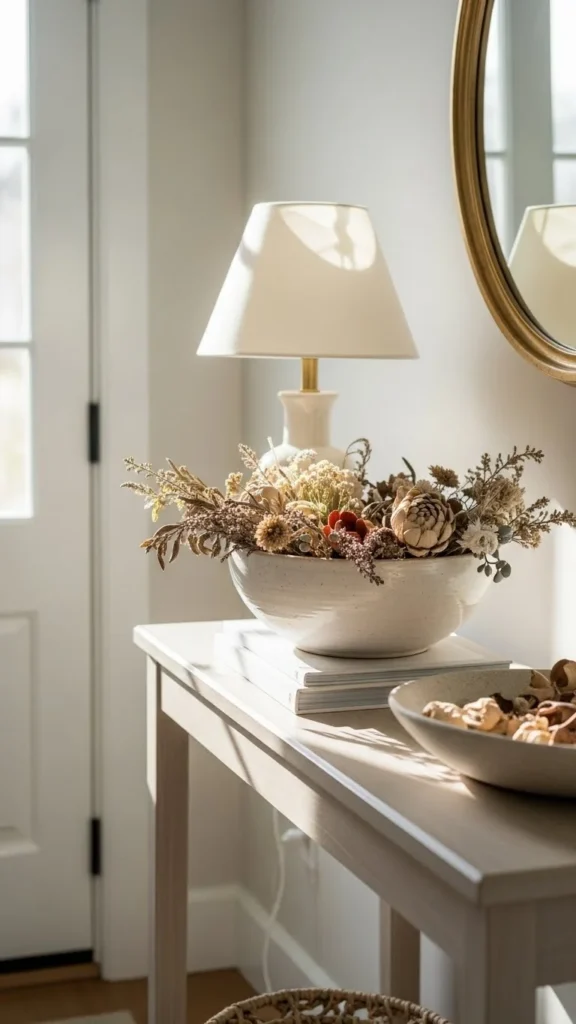
Subtle scent makes an entry memorable. Use dried botanicals or essential oil diffusers.
Keep it mild. Strong scents overwhelm small spaces.
Natural options feel calm and welcoming. Replace them as needed.
Scent works quietly but leaves a lasting impression.
17. Simple Door Hardware Update
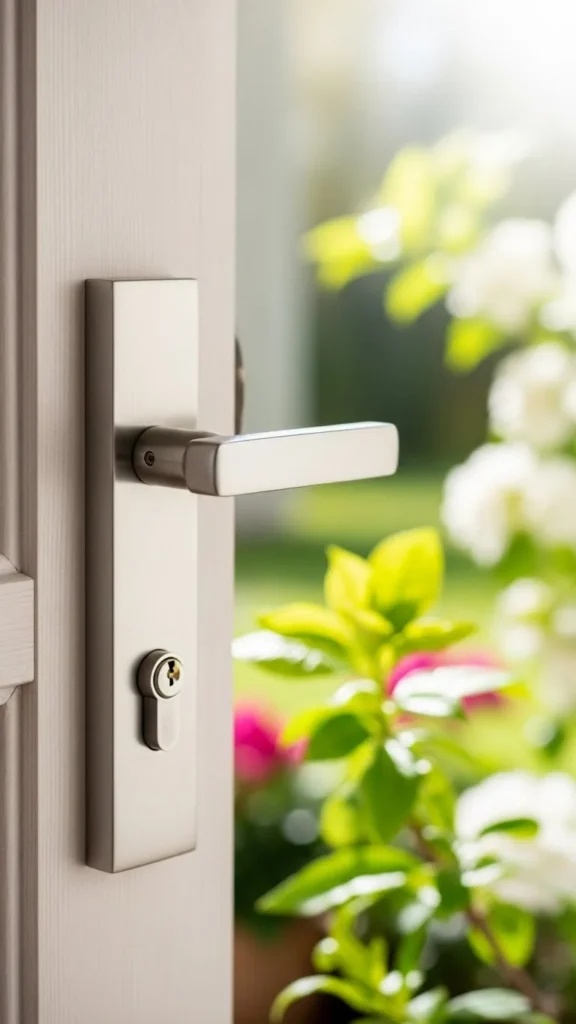
Swapping door hardware changes the look fast. Choose finishes that match nearby accents.
Installation is usually quick. Many sets come with instructions.
This update works for both inside and outside doors.
Small details often make the biggest difference.
18. Entryway Wall Color Refresh
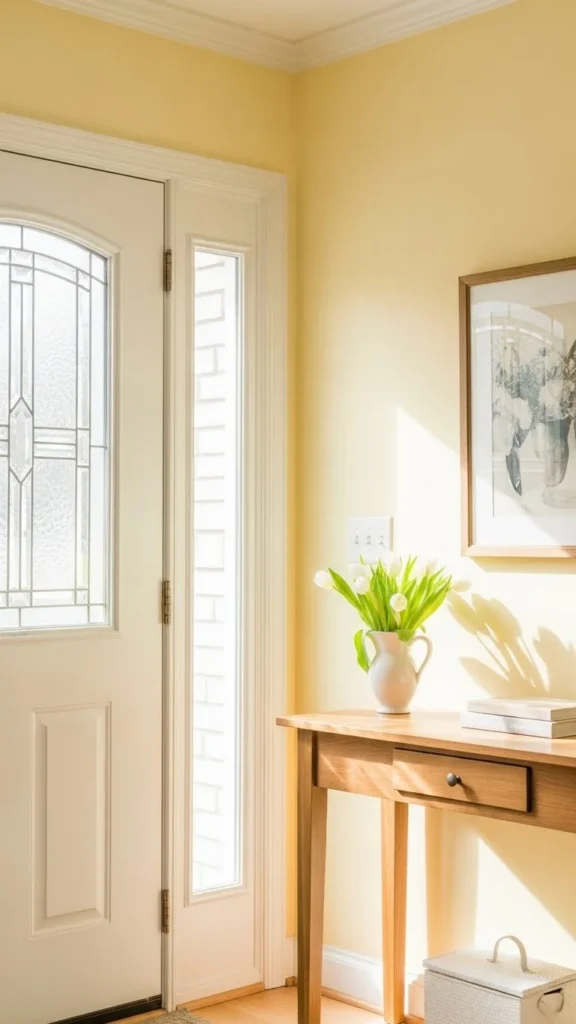
A lighter wall color can shift the whole space. Soft neutrals work best.
Sample paint before committing. Lighting affects tone.
Paint only the entry area if repainting the whole home isn’t possible.
It’s a budget-friendly way to change the mood.
19. Minimal Door Wreath Alternative
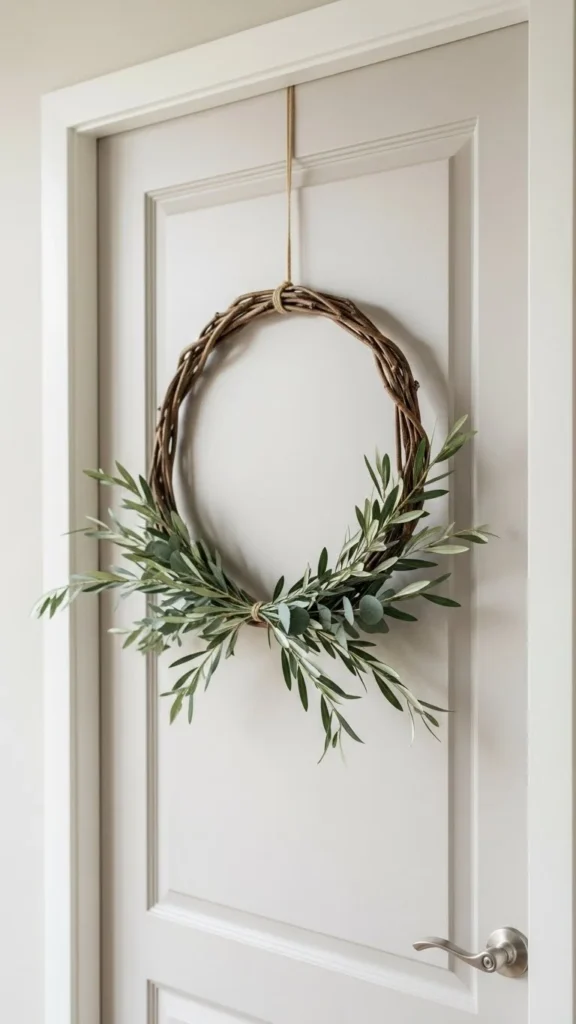
Traditional wreaths aren’t required. A simple hoop or branch works well.
Keep designs clean. Avoid busy elements.
This approach feels relaxed and modern.
It’s easy to store and reuse.
20. Matching Storage Containers
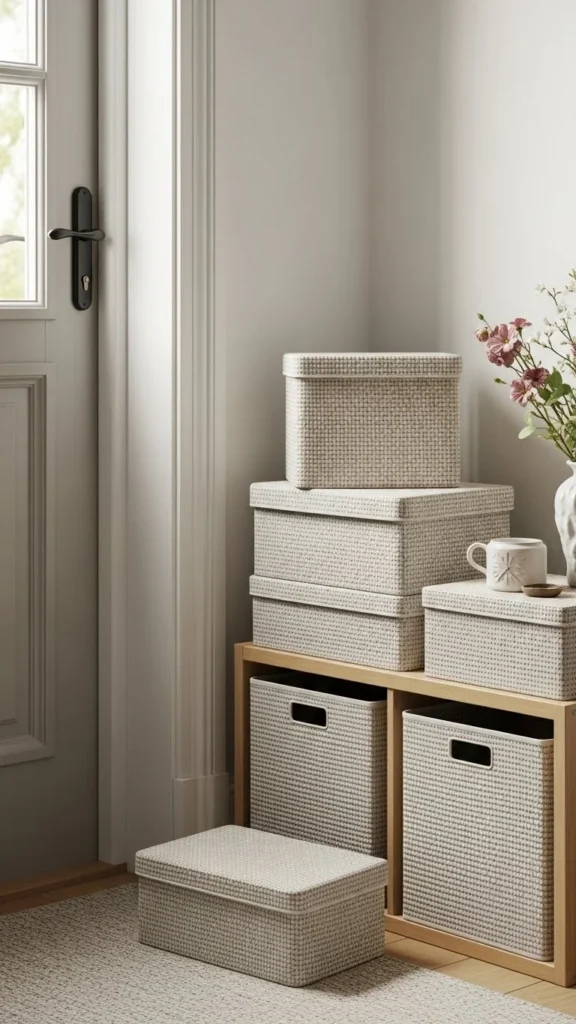
Matching containers bring order. Use them for gloves, hats, or mail.
Consistency matters more than cost.
Labels can help but aren’t required.
This creates visual calm quickly.
21. Entryway Runner for Long Spaces
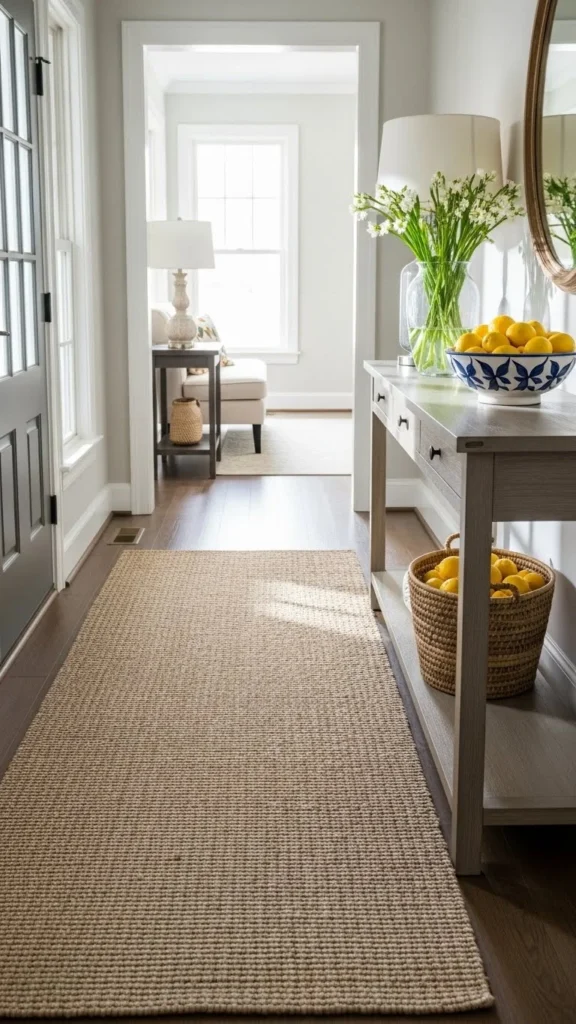
Runners guide movement through long entryways.
Choose low-pile materials for easy care.
Center it to keep the space balanced.
It adds comfort without blocking flow.
22. Slim Cabinet for Hidden Storage
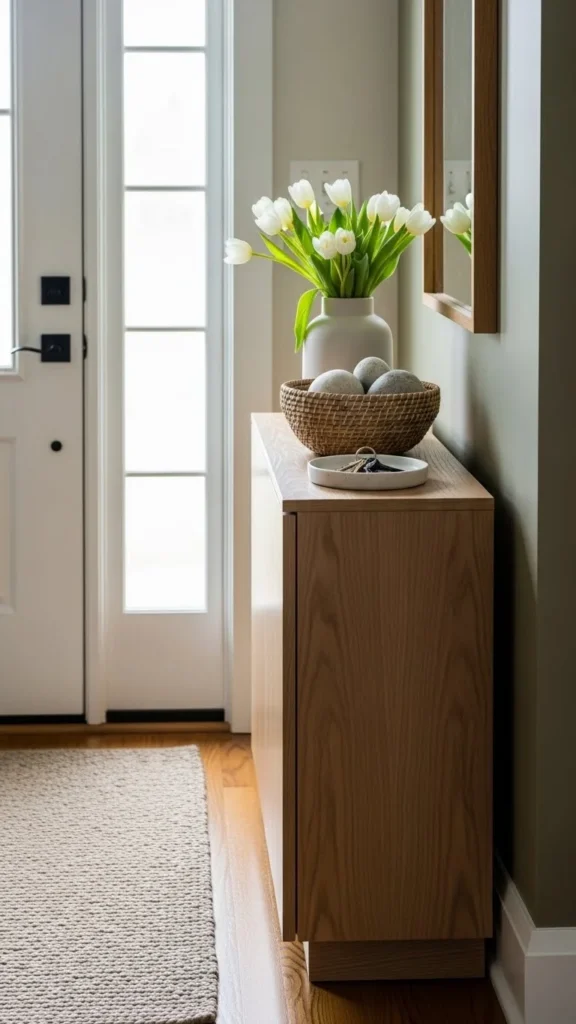
Slim cabinets hide clutter. They work well in tight spaces.
Store shoes, bags, or supplies inside.
Keep the top styled simply.
Hidden storage keeps the entry calm.
23. Natural Texture Wall Accent
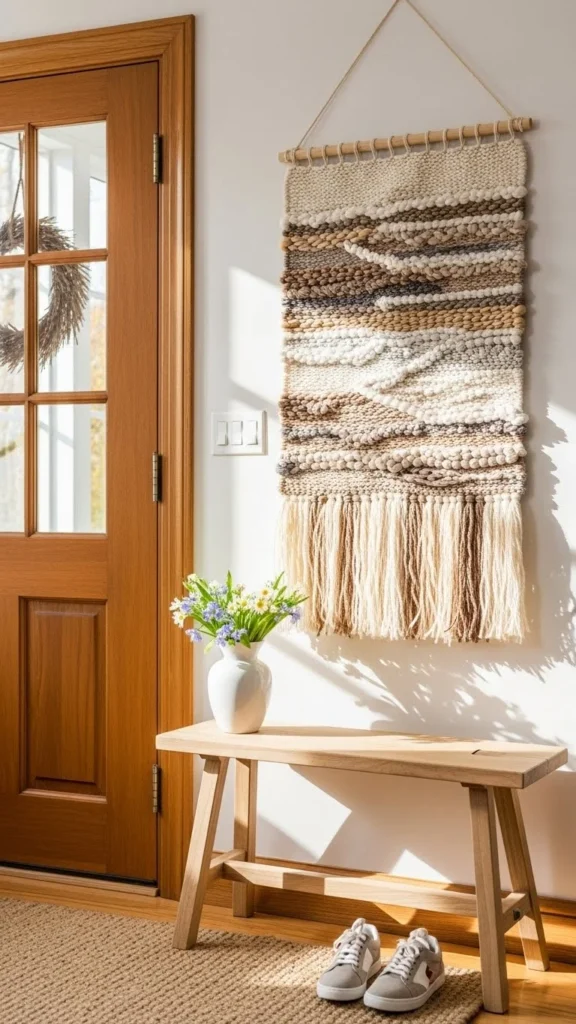
Texture adds interest without color overload.
Woven pieces or wood accents work well.
Limit to one feature piece.
This keeps the space grounded.
24. Entryway Clock for Function
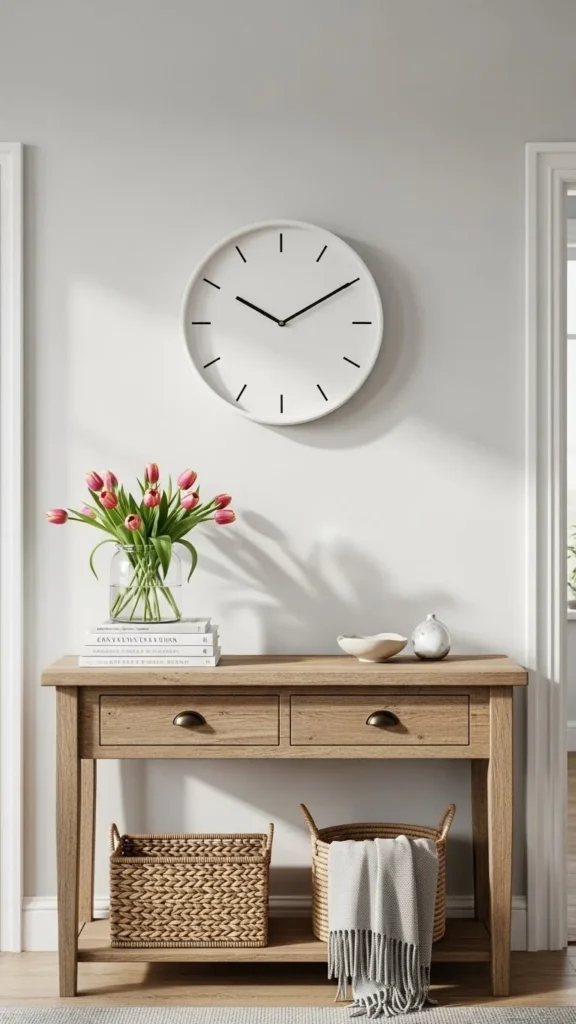
A clock adds function near the door.
Choose simple designs with clear numbers.
Hang it where it’s easy to see.
It’s helpful without taking space.
25. Coordinated Color Palette
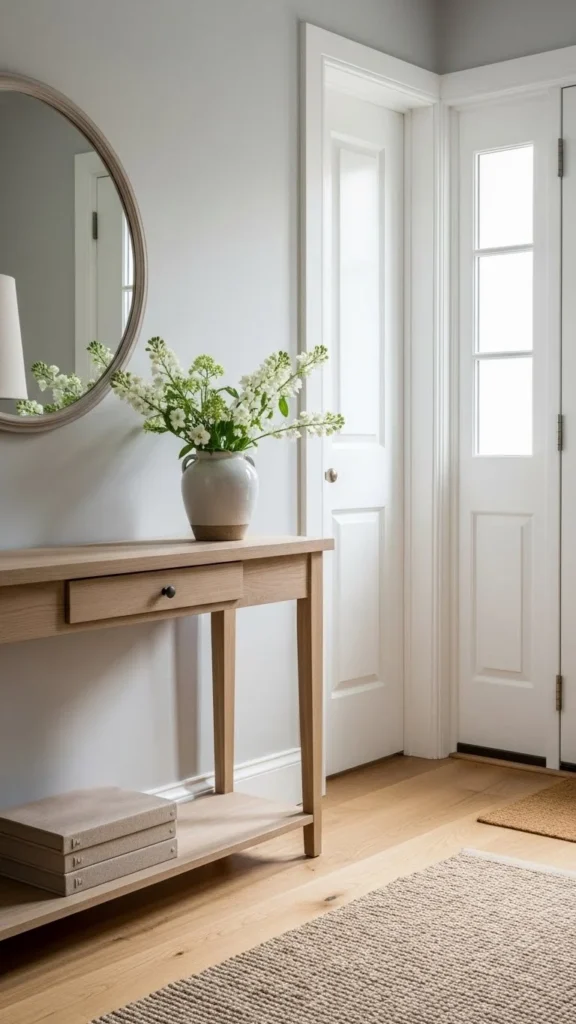
Limit the palette to two or three colors.
Repeat them across decor.
This creates a cohesive look.
It makes updates easier later.
26. Clear Floor Space Focus
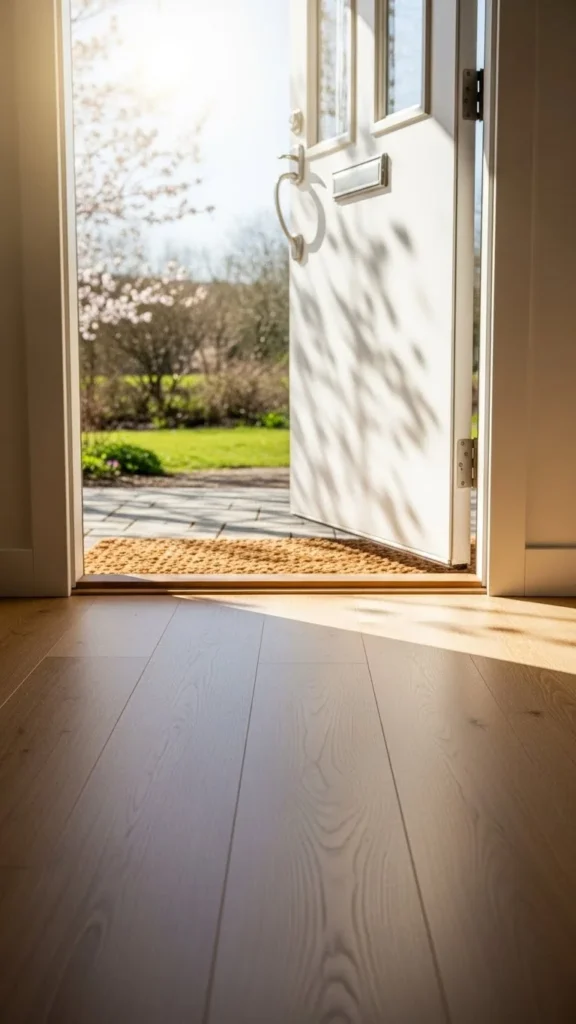
Clear floors make entryways feel open.
Remove items that don’t serve a purpose.
Keep pathways wide and simple.
This improves both function and style.
Conclusion
A welcoming spring entryway doesn’t require major changes or high spending. Small updates, thoughtful organization, and simple styling choices can completely change how the space feels. By focusing on light materials, practical storage, and calm visuals, your entryway becomes a place that feels organized and inviting every time you walk through the door. Save the ideas that fit your space best and start with one change at a time.
Leave a Reply